Blog
Top Critical Thinking Exercises for Employees to Improve Performance
Workplaces today move quickly and teams face new challenges almost every day. Employees must think clearly and make smart decisions to stay effective. Critical thinking helps workers understand situations deeply and avoid rushed or emotional choices. It allows teams to solve problems with accuracy and work together with more confidence. When employees think better they perform better and support long term success for the company.
What is Critical thinking exercises?
Critical thinking exercises are structured activities designed to help individuals analyze information more deeply, evaluate evidence, and make better decisions. These exercises often involve problem-solving scenarios, logical reasoning tasks, brainstorming sessions, or real-world case studies. By engaging in critical thinking exercises, individuals learn to question assumptions, identify patterns, and consider multiple perspectives before reaching conclusions. This makes them more effective in academic, professional, and everyday decision-making situations.
In the workplace, critical thinking exercises help employees strengthen their ability to solve complex problems, collaborate intelligently, and adapt to new challenges. Organizations often use these exercises in training programs, team workshops, and performance development plans to encourage more innovative and strategic thinking. By practicing critical thinking exercises regularly, employees enhance their analytical skills, improve communication, and contribute more effectively to organizational goals.
What is employee productivity?
Employee productivity refers to how efficiently an employee performs tasks, contributes to organizational goals, and uses time and resources to produce meaningful results. Higher employee productivity means workers complete tasks faster, maintain quality, and help the company achieve better performance. Companies often measure productivity by evaluating output, task completion rates, time management, and overall contribution to team success.
In today’s hybrid and remote work environments, employee productivity is closely tied to workplace tools, communication systems, and a supportive work culture. Factors such as a well-organized remote work setup, access to the right technology, and flexible scheduling all play a major role in ensuring employees stay focused and engaged. When organizations provide the proper resources and remove unnecessary barriers, employee productivity naturally increases.
Ultimately, improving employee productivity benefits both the employee and the organization. Employees experience reduced stress and greater satisfaction, while companies achieve higher profitability and better operational efficiency. By investing in training, modern tools, and efficient workflow systems, businesses can create an environment where high employee productivity becomes the standard.
Why We Need to Practice Critical Thinking?
Practicing critical thinking is essential because it helps individuals make informed and logical decisions in everyday life and the workplace. Rather than accepting information at face value, critical thinking encourages us to analyze facts, evaluate sources, and consider different perspectives. This ability reduces errors in judgment and leads to more accurate conclusions, especially in complex or high-impact situations.
Critical thinking also strengthens problem-solving skills. When faced with challenges, individuals who think critically can break problems into manageable parts, identify root causes, and explore effective solutions. This approach fosters creativity and innovation, allowing people to respond thoughtfully instead of reacting impulsively. In professional environments, critical thinking improves productivity and supports better strategic planning.
In addition, practicing critical thinking promotes continuous learning and adaptability. As industries, technologies, and work environments evolve, the ability to question assumptions and adapt to new information becomes increasingly important. Critical thinkers are more open to change, better equipped to handle uncertainty, and more confident in navigating new challenges, making this skill vital for personal growth and long-term success.
Why Critical Thinking Exercises Are Important in 2026?
Critical thinking is essential because it helps employees make strong decisions and handle complex situations at work. It improves communication and encourages teams to explore ideas with more clarity. These points explain why critical thinking plays such a valuable role.
- Better Decision Making: Employees make thoughtful decisions when they analyze facts instead of reacting quickly. They learn to understand the situation fully before choosing a direction. This reduces mistakes and supports better outcomes in daily tasks.
- Stronger Communication: Critical thinking teaches employees to explain their ideas clearly and listen more actively. Teams understand each other better because they share information with more clarity. This creates smoother discussions and fewer misunderstandings during meetings.
- Effective Problem Solving: Employees identify the real cause of a problem instead of focusing on surface issues. This leads to faster solutions and prevents the same problems from returning. Teams become more confident because they know how to explore deeper questions.
- Higher Creativity and Innovation: Critical thinking encourages employees to consider new possibilities and explore different ideas. Teams approach challenges from multiple angles and discover fresh solutions. This mindset supports innovation and improves the overall quality of work.
- Stronger Independence: Employees become more independent when they learn to evaluate situations on their own. They rely less on constant supervision and make decisions with greater confidence. This increases productivity and creates a more capable and reliable workforce.
- Reduced Workplace Stress: Clear thinking helps employees stay calm when facing complex or unexpected situations. They understand how to break problems into smaller parts and solve them step by step. This reduces stress and keeps the team focused during difficult moments.
Why Critical Thinking Skills Are Important for Employees ?
Critical thinking is one of the most valuable skills employees can develop in today’s fast-paced workplace. It allows professionals to analyze information, evaluate different perspectives, and make well-informed decisions. Instead of reacting impulsively, employees with strong critical thinking abilities approach challenges logically and strategically.
Organizations benefit greatly when their workforce practices critical thinking. Employees become better problem solvers, collaborate more effectively with their teams, and contribute innovative ideas that improve productivity. In environments where businesses constantly face new challenges and technological changes, critical thinking helps teams adapt and stay competitive.
Developing critical thinking skills also encourages employees to question assumptions, identify potential risks, and explore creative solutions. As a result, companies build stronger teams that can handle complex situations and drive continuous improvement.
Improves Problem-Solving Skills
Critical thinking helps employees break down complex problems into manageable parts. Instead of relying on quick assumptions, they analyze the situation, identify root causes, and explore multiple solutions before deciding on the best course of action.
When employees use critical thinking during problem solving, they are more likely to develop effective and sustainable solutions. This approach reduces errors, minimizes risks, and improves overall workplace efficiency. Teams that practice problem-solving exercises regularly can handle challenges more confidently and deliver better results.
Encourages Better Decision Making
Strong decision-making skills are essential in every organization. Critical thinking enables employees to evaluate available information carefully and weigh the pros and cons of different options before making a decision.
Rather than making choices based on assumptions or limited information, employees use logic and evidence to guide their decisions. This leads to smarter business strategies, improved project outcomes, and more reliable results. When teams adopt critical thinking techniques, decision making becomes more structured, transparent, and effective.
Boosts Team Collaboration
Critical thinking also plays a key role in improving teamwork and collaboration. When employees think critically, they listen to different viewpoints, ask meaningful questions, and respect diverse opinions during discussions.
This open and analytical approach encourages healthy debates and constructive feedback within teams. As a result, employees can combine their knowledge and perspectives to develop stronger ideas and innovative solutions. Organizations that promote critical thinking create collaborative environments where teams work together more effectively to achieve shared goals.
Top Critical Thinking Exercises for Employees
These exercises help employees practice critical thinking in structured and practical ways. Each activity builds different skills and can be adapted to your team’s needs.
The Ladder of Inference
This exercise helps employees understand how quickly they move from simple facts to personal assumptions. Ask the team to write down what they observed and what they assumed during the situation. Discuss both lists to highlight the difference between real information and personal interpretation. This activity builds awareness and reduces rushed or emotional decisions in daily work.
The Five Whys Technique
This technique guides teams toward the true cause of a problem using repeated questioning. Start with a basic question and continue asking why until you uncover the real root issue. Employees learn to focus on the main problem instead of addressing short term symptoms. This improves problem solving and prevents the issue from returning in the future.
Inversion Thinking
In this activity the team explores how a project or goal could completely fail. Employees list actions that would create failure and then convert each item into a positive improvement. This process encourages deeper thinking and reveals hidden risks before they appear. The exercise helps teams build stronger strategies with more clarity and creativity.
Argument Mapping
Argument mapping breaks down complex decisions into clear and organized parts. Create a simple map that shows the main idea supported by arguments and evidence. Review the map together and highlight weak points or missing information that needs attention. This method helps employees think logically and build stronger arguments for team discussions.
Distinguishing Opinion from Fact
This exercise teaches employees to separate personal opinions from real and reliable information. Share different statements and ask the team to classify each one as a fact or an opinion. Discuss unclear statements to help everyone understand why certain ideas lack evidence. This improves clarity and supports better communication during important decisions.
Objectivity and Bias Check Activity
This activity helps employees notice hidden biases that influence their choices. Present a workplace scenario and ask the team to list all factors affecting their decisions. Identify which reasons are based on facts and which reasons come from personal bias. This improves fairness and supports more objective decision making within the team.
Six Thinking Hats
This method encourages employees to explore a problem from many different angles. Each hat represents a unique thinking style such as facts emotions creativity or process management. Teams rotate hats and share insights that help create a complete and balanced understanding. This approach leads to more thoughtful discussions and stronger final decisions.
Role Playing Scenarios
Role playing helps employees practice real workplace situations in a safe environment. Assign roles to team members and let them handle the scenario step by step. Observe how the situation develops and discuss what worked well after the activity. This builds confidence and strengthens communication during real challenges.
Reverse Brainstorming
This exercise encourages teams to explore the opposite direction of traditional brainstorming. Ask the team how they could make the situation worse and list every idea they share. Convert each negative idea into a positive improvement to create a stronger action plan. This method unlocks creativity and helps teams discover solutions they might overlook.
How to Implement Critical Thinking Exercises at Work ?
Implementing critical thinking exercises in the workplace helps employees develop analytical and problem-solving skills that improve overall performance. Companies can integrate these exercises into training sessions, team meetings, or professional development programs. The goal is to create an environment where employees feel comfortable questioning ideas, analyzing situations, and exploring different solutions.
Managers and team leaders can encourage critical thinking by introducing structured activities that challenge employees to evaluate information, discuss alternative perspectives, and collaborate on solutions. When practiced consistently, these exercises help employees become more confident decision-makers and improve their ability to handle complex workplace challenges.
Use Team-Based Activities
Team-based activities are one of the most effective ways to develop critical thinking in the workplace. Group exercises encourage employees to analyze problems together, share insights, and evaluate different viewpoints. Activities such as brainstorming sessions, case study discussions, and problem-solving workshops allow teams to collaborate while practicing analytical thinking.
These activities also help employees learn from each other’s experiences and perspectives. When team members work together to solve challenges, they develop stronger communication skills and build a deeper understanding of how to approach complex situations logically.
Encourage Open Discussions
Open discussions create an environment where employees feel comfortable sharing ideas and questioning assumptions. Leaders can promote critical thinking by encouraging employees to ask thoughtful questions, analyze situations from different angles, and support their opinions with reasoning or evidence.
Regular discussions during meetings or training sessions allow teams to explore multiple solutions before making decisions. This process helps employees develop confidence in their analytical abilities and improves the quality of ideas generated within the organization.
Practice Real-World Scenarios
Using real-world scenarios is another effective way to strengthen critical thinking skills. Employees can work through realistic workplace challenges, analyze possible outcomes, and determine the best course of action. This type of exercise helps employees apply theoretical knowledge to practical situations.
Scenario-based activities also prepare employees to handle unexpected challenges in their daily work. By practicing how to analyze and respond to real problems, teams become more adaptable, resourceful, and capable of making informed decisions under pressure.
Benefits of Practicing Critical Thinking Exercises Regularly
Practicing critical thinking exercises regularly helps employees sharpen their analytical abilities and approach workplace challenges with greater confidence. These exercises train individuals to examine information carefully, question assumptions, and consider multiple perspectives before reaching conclusions. Over time, this habit strengthens the way employees think, communicate, and make decisions.
One of the biggest benefits of regular critical thinking practice is improved problem-solving. Employees become more skilled at identifying the root cause of issues instead of addressing only surface-level problems. This leads to more effective and long-lasting solutions that benefit the entire organization.
Regular critical thinking exercises also enhance creativity and innovation. When employees learn to analyze situations from different angles, they are more likely to generate fresh ideas and discover new ways to improve processes, products, or services. This mindset encourages continuous improvement and helps companies stay competitive in a rapidly changing business environment.
Another important benefit is stronger decision-making skills. Employees who practice critical thinking are better equipped to evaluate risks, weigh options, and choose solutions based on evidence rather than assumptions. This results in smarter decisions that support business goals and improve overall productivity.
Additionally, practicing critical thinking exercises promotes better collaboration among teams. Employees become more open to different viewpoints and are more willing to engage in constructive discussions. As a result, teams can work together more effectively, solve problems faster, and build a workplace culture that values thoughtful analysis and shared learning.
Tips to Improve Critical Thinking Skills Faster
Improving critical thinking skills does not happen overnight, but with consistent practice and the right strategies, employees can develop these abilities more quickly. Critical thinking involves analyzing information, questioning assumptions, and making well-reasoned decisions. By adopting practical habits and exercises, individuals can strengthen their thinking skills and become more effective problem solvers in the workplace.
One of the most effective ways to improve critical thinking is by asking thoughtful questions. Instead of accepting information at face value, employees should ask questions such as why, how, and what evidence supports this idea. This approach encourages deeper analysis and helps uncover insights that might otherwise be overlooked.
Another useful tip is to evaluate information from multiple perspectives. Considering different viewpoints allows employees to understand complex situations more clearly and avoid biased conclusions. This practice also promotes better collaboration since individuals learn to respect and analyze diverse opinions before forming decisions.
Practicing reflection is also essential for developing stronger thinking skills. After completing a task or making a decision, employees should review the outcome and evaluate what worked well and what could be improved. Reflecting on experiences helps individuals learn from mistakes and refine their decision-making process over time.
Finally, participating in regular problem-solving activities or training exercises can significantly accelerate the development of critical thinking skills. Activities such as case studies, brainstorming sessions, and scenario-based discussions encourage employees to apply logical reasoning and analytical thinking in real workplace situations. With continuous practice, these habits help professionals become more confident, strategic, and effective in their roles.
Common Mistakes That Reduce Critical Thinking
While many organizations encourage critical thinking, certain habits and behaviors can limit an employee’s ability to think analytically and make well-informed decisions. Recognizing these common mistakes is the first step toward improving critical thinking skills and creating a more thoughtful workplace environment.
One common mistake is relying on assumptions instead of facts. When employees make decisions based on incomplete information or personal beliefs, they may overlook important details that could change the outcome. Critical thinking requires gathering accurate information and evaluating evidence before reaching conclusions.
Another issue is avoiding questions or deeper analysis. Some employees may accept ideas without questioning them, especially in fast-paced environments where quick decisions are expected. However, failing to ask questions can prevent teams from identifying potential risks, alternative solutions, or better strategies.
Confirmation bias is another factor that can weaken critical thinking. This happens when individuals only focus on information that supports their existing opinions while ignoring evidence that challenges their views. To think critically, employees must be willing to consider different perspectives and evaluate all relevant information objectively.
Additionally, fear of making mistakes can reduce critical thinking. When employees are afraid to express ideas or challenge assumptions, they may hesitate to participate in discussions or propose innovative solutions. Encouraging a supportive environment where constructive feedback is welcomed can help employees develop stronger analytical thinking skills.
By identifying and addressing these common mistakes, organizations can create a culture that values thoughtful analysis, open discussion, and continuous learning. This ultimately leads to better decision making, improved teamwork, and more effective problem solving across the workplace.
Improve Critical Thinking Exercises with DeskFlex
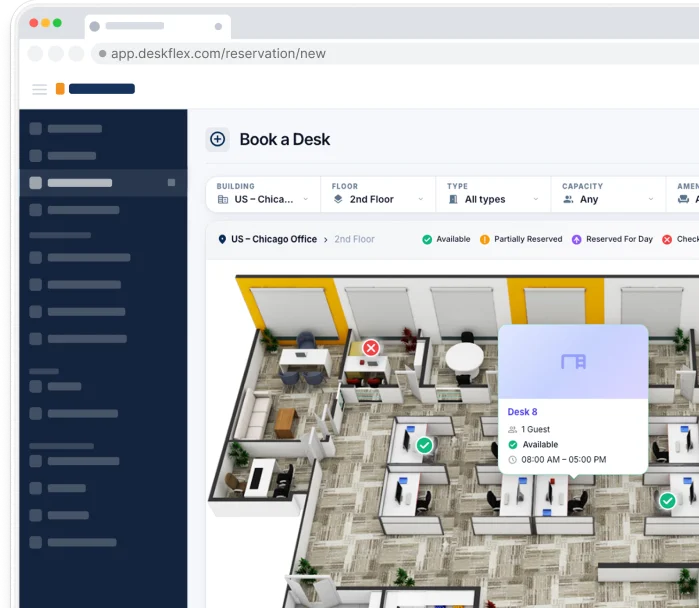
DeskFlex helps teams plan training sessions and organize workshops with better coordination and less effort. Managers can book spaces and manage schedules easily which removes confusion during busy training periods. Regular sessions become simple to maintain and teams stay organized while developing stronger thinking skills. DeskFlex supports a productive workplace where employees learn effectively and improve their decision making abilities.
Train Your Brain With Critical Thinking Exercises
Training your brain with critical thinking exercises helps strengthen your ability to analyze information, solve problems, and make sound decisions. These exercises encourage you to question assumptions, evaluate evidence, and think logically rather than relying on habits or quick judgments. Regular practice improves mental clarity and sharpens your reasoning skills over time.
One effective way to develop critical thinking is through problem-solving activities such as case studies, logic puzzles, and scenario-based challenges. These exercises require you to identify problems, explore multiple solutions, and assess potential outcomes before making a decision. Reflective exercises, such as asking “why” and “how” or reviewing past decisions, also help build deeper analytical skills.
Group-based exercises further enhance critical thinking by exposing you to different perspectives. Activities like debates, brainstorming sessions, and role-playing scenarios encourage discussion and evaluation of alternative viewpoints. By consistently practicing these exercises, individuals can improve their cognitive flexibility, enhance decision-making abilities, and apply critical thinking more effectively in both professional and everyday situations.
Conclusion: Build Stronger Teams with Critical Thinking Exercises
Critical thinking exercises play an important role in developing a more capable and adaptable workforce. By encouraging employees to analyze information, question assumptions, and evaluate different solutions, organizations can create teams that are better prepared to handle complex workplace challenges.
When employees regularly practice critical thinking activities, they become more confident problem solvers and decision-makers. These skills help them approach tasks more strategically, identify opportunities for improvement, and contribute innovative ideas that benefit the organization. Over time, this leads to improved productivity, stronger collaboration, and better overall performance.
Organizations that prioritize critical thinking also build a workplace culture that values learning, open communication, and continuous improvement. When employees feel empowered to share ideas and participate in meaningful discussions, teams can work together more effectively to achieve common goals.
By integrating critical thinking exercises into training programs and daily work routines, businesses can strengthen their teams, improve decision-making processes, and create an environment where employees are equipped to succeed in a rapidly evolving workplace.
Frequently Asked Questions (FAQs)
What is the difference between critical thinking and problem solving?
Critical thinking is the ability to analyze, evaluate, and interpret information logically. Problem solving uses critical thinking as a tool to develop practical solutions for specific challenges. Both skills are complementary but focus on different stages of decision making.
How can critical thinking exercises improve decision-making?
These exercises train employees to question assumptions, identify biases, and evaluate alternatives. As a result, decisions are more evidence-based and less influenced by personal opinions or emotion.
Which metrics measure improvement in critical thinking?
Improvement can be tracked by evaluating faster and more accurate decision making, quality of solutions, and employee engagement during exercises. Surveys, performance reviews, and project outcomes also provide measurable insights.
How long should each critical thinking activity last?
Most activities are effective within 10 to 20 minutes, depending on team size and complexity. Short, focused sessions maintain engagement and ensure practical learning without overwhelming participants.
Can remote teams benefit from these exercises?
Yes, all activities can be adapted for virtual teams using video calls, breakout rooms, and shared digital collaboration tools. Remote exercises maintain interaction and ensure learning is consistent across locations.
How often should teams practice critical thinking exercises?
Weekly or biweekly sessions are recommended to develop consistent thinking habits. Regular practice ensures that employees gradually integrate critical thinking into daily workflows.
What is the role of a facilitator in these exercises?
Facilitators guide the team through exercises, keep discussions focused, and ensure balanced participation. Their presence ensures that objectives are met and learning is maximized.
How much How do you choose the right exercise for your team?kiosk mode cost?
Choose exercises based on team size, skill level, and the type of thinking you want to develop. Matching exercises to real workplace challenges ensures relevance and practical application.
Can critical thinking exercises be applied to real projects?
Yes, using real company problems makes exercises more meaningful and actionable. Employees learn to analyze situations and propose solutions that can directly improve outcomes.
How do you track long-term improvement in critical thinking?
Track metrics such as decision accuracy, problem-solving efficiency, and team feedback over time. Continuous observation and documentation help measure skill growth and refine exercises.


Support
Demo
Blog
Newsroom