Agile Work Environment: Definition, Benefits, and How It Works
The agile work environment has become a popular model for companies looking to improve flexibility and collaboration.
This type of work setup emphasizes adaptability, teamwork, and continuous improvement, all while reducing the traditional barriers of office space.
But what exactly is an agile work environment, and how does it differ from the traditional office setup?
In this article, we will explore the key features of an agile workplace environment, its benefits, and how it differs from the traditional office setup.
Agile Meaning
Agile means the ability to move quickly, adapt easily, and respond effectively to change.
In a business and workplace context, the agile meaning goes beyond speed—it represents a mindset focused on:
- Flexibility in processes and decision-making
- Continuous improvement
- Collaboration across teams
- Delivering value in small, iterative steps
Originally used in software development, agile is now widely applied in project management, workplace design, and organizational strategy.
👉 In simple terms:
Agile = being flexible, responsive, and continuously improving.
Agile in Different Contexts
- Agile methodology: A structured approach using frameworks like Scrum or Kanban to manage work efficiently
- Agile project management: Managing projects through short cycles, feedback, and adaptability
- Agile work environment: A flexible workplace that supports collaboration and employee autonomy
This approach helps organizations improve employee engagement, productivity, and overall performance in a fast-changing world.
What is an Agile Environment?
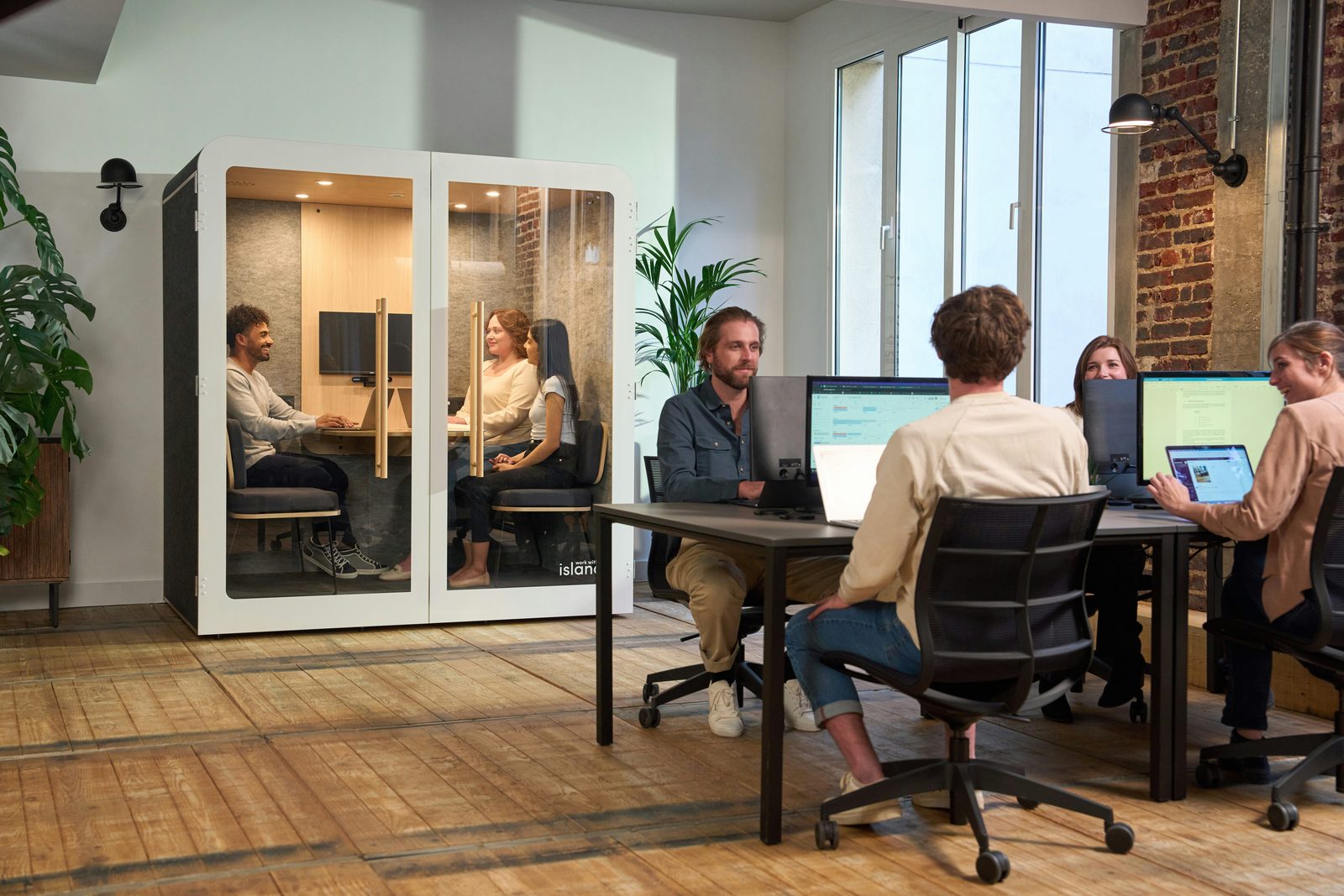
An agile work environment is a workplace designed to support an agile way of working. It prioritizes flexibility and collaboration, enabling employees to move between different spaces depending on the nature of their tasks.
These environments often include:
- Open collaboration areas: For group discussions, brainstorming sessions, and team meetings.
- Quiet zones: Where employees can focus on tasks requiring concentration and quiet spaces.
- Breakout spaces: For informal meetings, quick stand-up discussions, or casual interactions.
- Touchdown spaces: Where employees can work temporarily between meetings or when they need quick access to a workspace.
The goal of an agile work environment is to enable teams to work together more fluidly, respond to change more effectively, and make decisions faster.
What Is Agile Methodology?
Agile methodology is a project management approach that focuses on delivering work in small, manageable parts while continuously improving through feedback and collaboration.
Instead of completing a project all at once, agile breaks work into short cycles called iterations or sprints, allowing teams to adapt quickly to changes.
Key Elements of an Agile Work Environment
An agile work environment is much more than just a physical space; it represents a philosophy that focuses on flexibility, collaboration, and productivity.
It incorporates several essential elements that help promote efficient work processes while meeting the needs of modern businesses and employees alike.
Flexible Office Layout
One of the defining features of an agile office is its flexible layout. Unlike traditional office spaces with fixed desks and cubicles, agile environments use adaptable furniture and multifunctional areas.
This includes movable desks, adjustable workstations, standing desks, and breakout spaces where teams can collaborate freely.
The flexibility of agile workspaces allows businesses to use their physical space more efficiently and adapt to changing needs.
Agile Office Design
An agile office design encourages collaboration and promotes a creative atmosphere for agile teams.
This can be done by incorporating open-plan layouts that foster interaction while still offering quiet zones for concentrated work or project management.
Breakout spaces serve as areas where teams can meet for quick brainstorming sessions or impromptu discussions great for agile working.
This not only improves space utilization but also allows for a more dynamic, engaging environment for employees implementing agile practices.
Collaborative Workspaces
Collaboration is a key aspect of any agile environment. Agile workplaces provide dedicated collaborative spaces where teams can work together on projects, share ideas, and engage in productive discussions.
These spaces are typically equipped with project management tools such as Kanban boards or software that enables teams to track progress, assign tasks, and manage workflows aligning with Agile practices often emphasized in CSM Certification.
Why Agile Environments Are Important in Today’s Workplace
Agile work environments are important in today’s workplaces for several reasons:
- Adaptability: As the nature of work continues to evolve, businesses need environments that can adapt to changes in team structures, project requirements, and technological advancements. Agile workspaces allow businesses to adjust their office space based on immediate needs without significant disruptions.
- Encourages collaboration: Agile workplaces tend to foster collaboration among team members by providing flexible spaces for group work. This helps employees communicate more effectively, share ideas, and solve problems together for an agile mindset.
- Supports a flexible workforce: With the rise of remote and hybrid working models, agile work environments allow employees to transition smoothly between different locations, such as working from home and the office. Employees benefit from having both dedicated workspaces and shared spaces that meet various work styles and needs.
- Improved employee satisfaction: Offering employees the freedom to choose where and how they work can lead to higher job satisfaction and retention. Agile workplaces cater to the diverse needs of employees, providing spaces for focus, collaboration, and relaxation.
Agile Workspace vs. Traditional Office Environment
A traditional office space often consists of fixed desks, rigid layouts, and hierarchical seating arrangements. Employees are usually assigned a specific desk or office and are expected to perform all their tasks from this designated space.
Traditional offices emphasize stability and routine, with limited flexibility in how the space is used.
In contrast, an agile approach breaks away from these constraints by offering maximum flexibility in how employees utilize office spaces.
Agile environments promote movement, adaptability, and quick changes to office layouts as projects and teams evolve.
The core differences between traditional and agile environments include:
Traditional Office Environment | Agile Work Environment |
Fixed desks and assigned seating | Flexible seating and unassigned desks |
Static office layouts | Dynamic spaces that adapt to project needs |
Hierarchical office structure | Flat, collaborative team-based structure |
Minimal opportunities for spontaneous collaboration | Spaces that encourage spontaneous interaction and brainstorming |
This adaptability and fluid approach in agile environments leads to higher employee productivity and better space utilization compared to traditional office settings.
Optimize Your Work Environment With DeskFlex

DeskFlex offers an all-in-one solution for businesses looking to manage their agile workspaces efficiently while fostering productivity and team collaboration.
Here’s a closer look at its key features:
Real-Time Workspace Booking
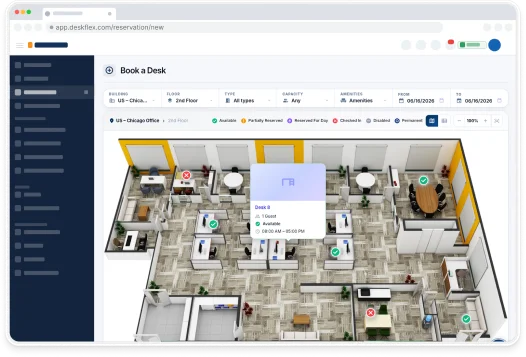
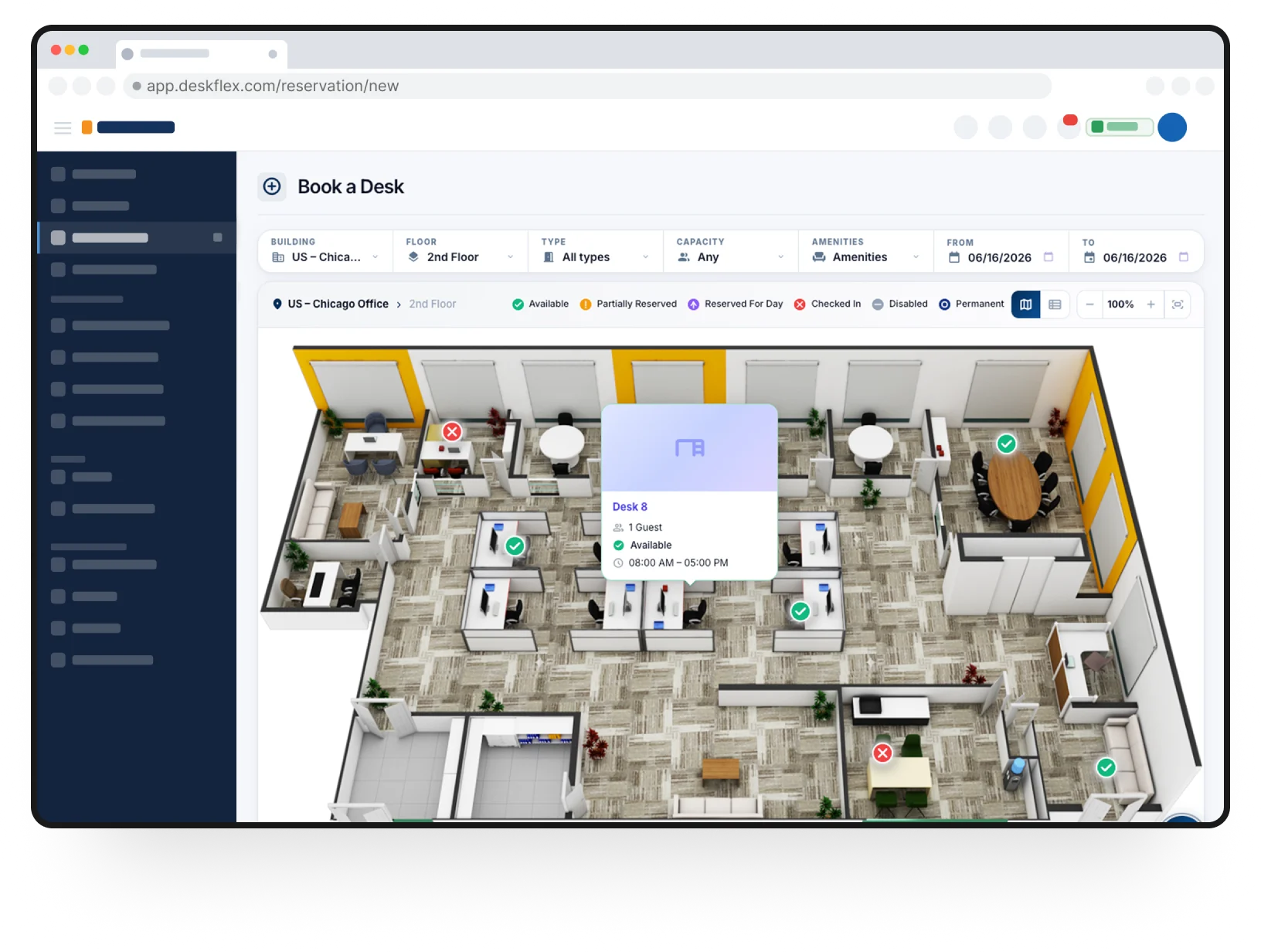
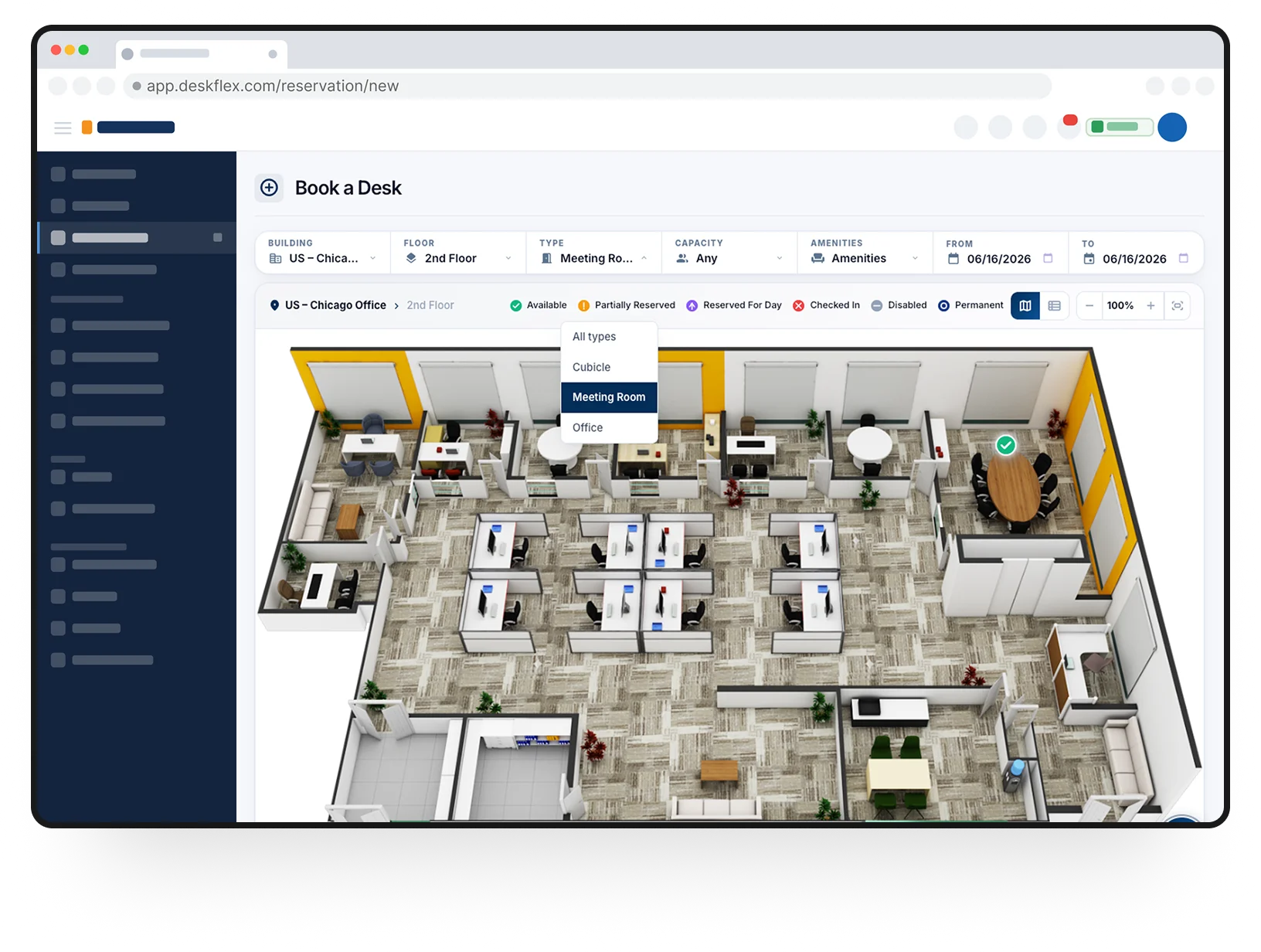
Agile teams need flexibility when it comes to their workspaces. DeskFlex allows team members to easily book workstations, meeting rooms, and other office resources in real time.
This feature ensures that employees can move freely between spaces based on the needs of their tasks without worrying about conflicts or unavailable spaces.
Integration with Agile Project Management Tools
DeskFlex seamlessly integrates with popular project management tools like Microsoft Outlook, Zapier, and Office 365, making it easier for agile teams to coordinate project schedules and manage workflows.
This integration means that teams can synchronize workspace reservations with their project timelines and task management, ensuring that workspace availability aligns with agile sprints or other project deadlines.
Improved Space Utilization and Resource Management
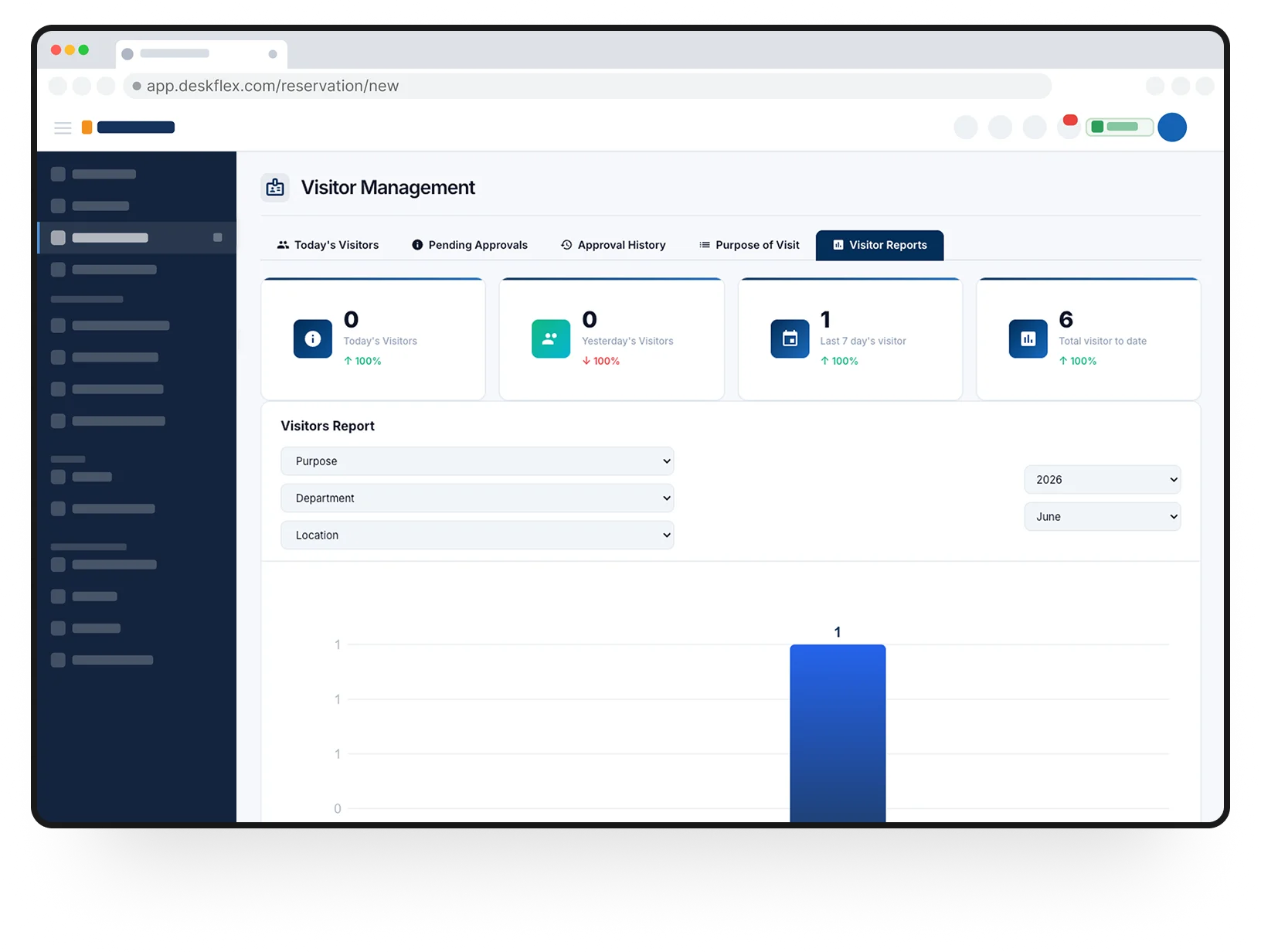
DeskFlex helps businesses monitor how their physical spaces are being used, providing insights into desk occupancy and meeting room usage.
This data allows businesses to make informed decisions about space allocation, ensuring they use their office spaces efficiently.
The reporting features allow managers to track trends in space utilization, helping them adjust layouts or seating arrangements based on real-time data.
Flexibility for Hybrid and Remote Teams
As hybrid work models become more common, DeskFlex provides the flexibility to manage remote and in-office employees efficiently.
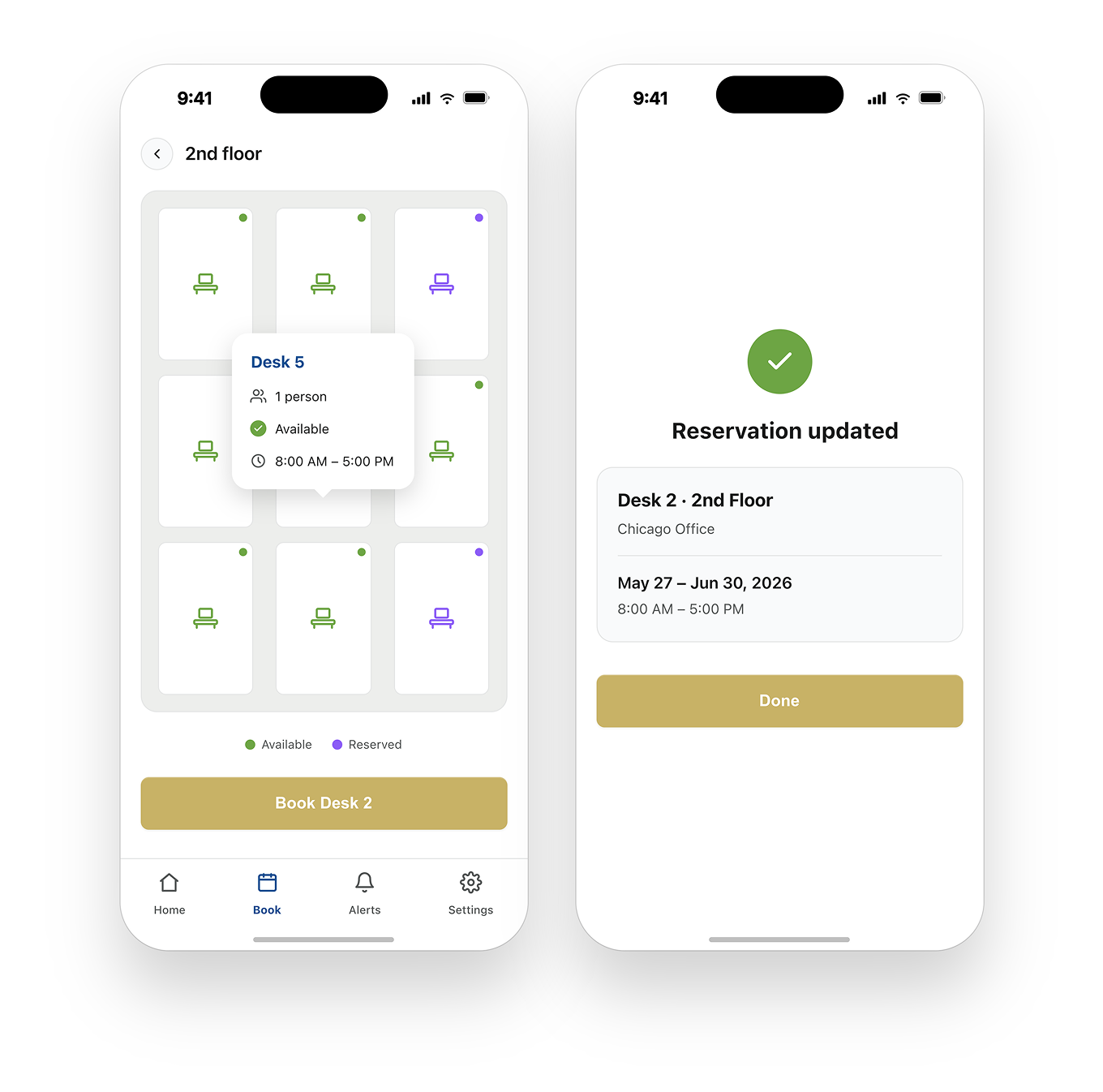
With DeskFlex, employees working remotely can check workspace availability before coming into the office.
This ensures that all team members, whether remote or in-office, have access to the spaces they need for collaborative or focused work.
Simple and User-Friendly Interface
DeskFlex is designed with simplicity in mind, ensuring that all team members can easily navigate the platform to book spaces, schedule meetings, and manage resources.
The intuitive interface reduces the need for training and streamlines the process of managing workspaces, making it easier for employees to focus on their core tasks.
Schedule a demo today and see how DeskFlex can transform your office into a more flexible, productive, and employee-friendly space!
Frequently Asked Questions (FAQs)
1. What is an agile work environment?
An agile work environment is a flexible workplace where employees can choose how, when, and where they work. It focuses on collaboration, adaptability, and improving productivity.
2. What is agile methodology in simple terms?
Agile methodology is a way of managing projects by breaking them into small tasks, completing them in short cycles, and improving continuously through feedback.
3. What is the meaning of agile?
The agile meaning refers to being flexible, adaptable, and quick to respond to change in work processes or project management.
4. What are the benefits of an agile work environment?
Key benefits include:
- Better employee engagement
- Increased productivity
- Faster decision-making
- Improved collaboration
- Efficient use of office space
5. How does agile project management work?
Agile project management works by dividing projects into short phases (sprints), allowing teams to review progress regularly and adjust plans as needed.
6. What tools are used in an agile work environment?
Common agile work environment software includes:
- Desk booking systems (like DeskFlex)
- Project management tools (Trello, Jira)
- Collaboration platforms (Slack, Teams)
7. What is the difference between agile and traditional work environments?
Agile workplaces are flexible and collaborative, while traditional environments are more structured with fixed roles and processes.
8. Why is agile important in modern workplaces?
Agile helps organizations adapt to change, improve efficiency, and stay competitive in fast-moving industries.


Support
Demo
Blog
Newsroom