


Blog

What is digital employee experience? A Detailed Guide
As work shifts toward hybrid and digital-first environments, employees rely almost entirely on workplace technology to get things done. Every login, system response, collaboration moment, and support interaction shapes how employees perceive their work. This is how digital employee experience has become a defining factor in how modern workplaces operate, scale, and retain talent.
When digital experiences involve inconveniences, productivity suffers, and frustration builds. On the other hand, when initiatives are intentional and well managed, employees can stay focused, engaged, and confident in their ability to perform their tasks. A strong digital employee experience platform helps organizations close this gap by aligning technology, people, and processes around how work truly happens.
What Is Digital Employee Experience?
Digital employee experience refers to employees’ overall quality of interactions with digital workplace tools during their stay in the company. It extends beyond usability and interfaces. It includes access to systems, collaboration, IT support, feedback loops, and the ease with which employees move between tools during daily work.
Digital employee experience connects employee experience, digital workplace experience, and digital transformation into one unified approach. Instead of treating engagement, productivity, and IT service experience as separate entities, digital experience management brings them together into a single, measurable framework.
This matters because the modern employee journey is increasingly digital. In hybrid and remote workforce experience models, technology is the workplace. When it fails, engagement and satisfaction decline rapidly.
Why is Digital Employee Experience Important?
Most organizations experience digital experience issues before they can clearly name them. These signs usually stem from friction in the digital workplace.
A strong digital employee experience delivers clear, measurable value by improving productivity, reducing tool friction, and lowering frustration caused by downtime and unresolved issues.
Moreover, having a strong digital employee experience strengthens employee engagement software through smoother daily workflows, supports a hybrid workplace and remote workforce experience equally, and enables data-driven decisions through workplace analytics.
When digital employee experience is treated as a strategic priority, workforce engagement becomes more sustainable and resilient.
Key Components of Digital Employee Experience
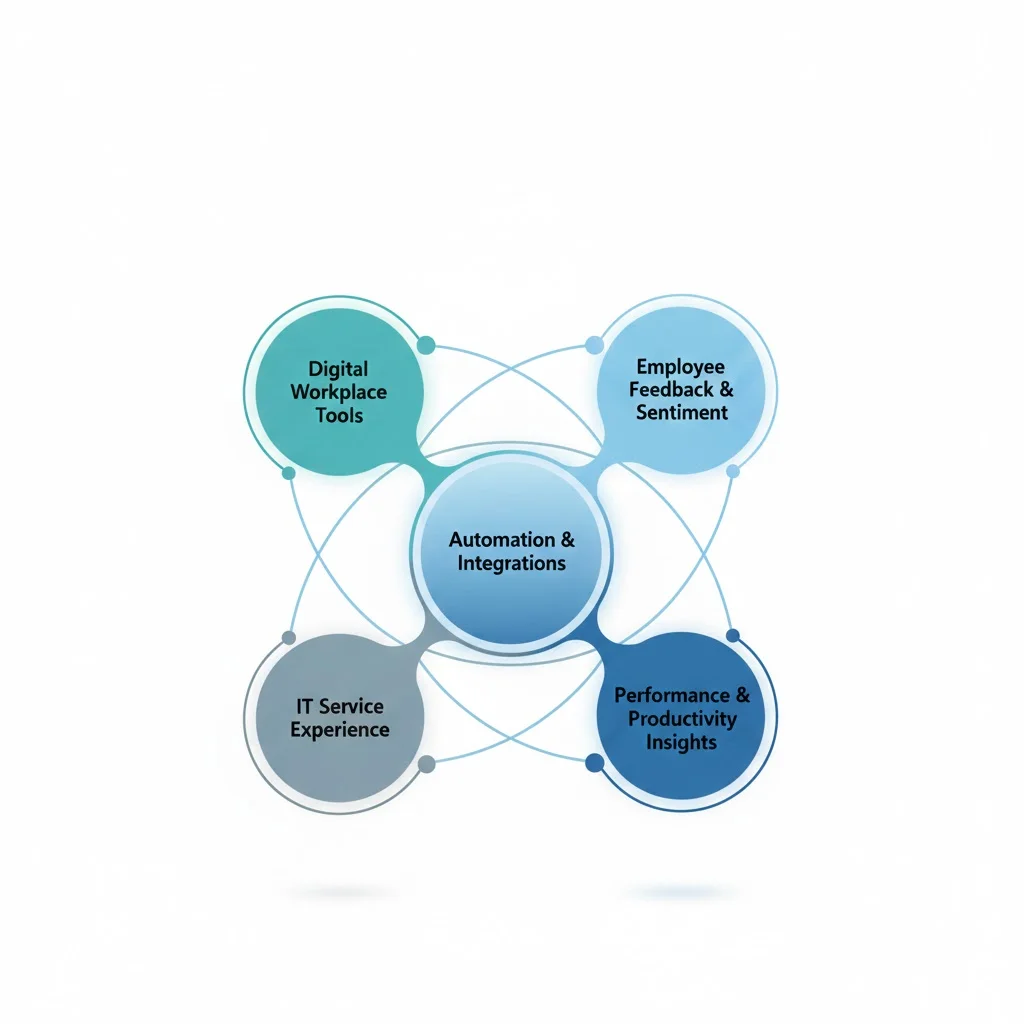
A strong digital employee experience is built from several interconnected components. Each plays a distinct role, but their real value comes from how they work together.
Digital Workplace Tools
Digital workplace tools greatly shape how work feels on a typical day. When collaboration platforms and core systems work together well, employees stay focused and efficient. But when they don’t, even the simpler tasks begin to feel heavier than expected.
Employee Feedback and Sentiment
Employee feedback is often where reality first shows up. It reflects how the digital tools perform in a real-time working scenario, not an ideal one. Sentiment adds an emotional signal that helps teams catch frustration or disengagement early.
IT Service Experience
IT service experience is rarely invisible. Fast, transparent support builds trust, while delays slowly and quietly break momentum. Bringing IT signals into the employee journey helps teams act before minor issues become daily issues.
Performance and Productivity Insights
Performance and productivity insights, combined with digital experience, lead to outcomes that leaders actually track and provide insights into the ins and outs of the company and its performance. Workplace and EX analytics highlight what drives employees forward and what slows them down.
Automation and Integrations
What really helps remove the small, repetitive tasks that interrupt focus are automation and integration tools; these are what glue everything together. Well-designed integrations allow employees to use tools more effectively without added work. Over time, the digital workplace feels more connected and easier to navigate.
Benefits of a Strong Digital Employee Experience
Investing in digital employee experience creates value over time. These are some of the benefits:
Fewer Daily Interruptions
When systems work reliably and efficiently, employees stop losing focus on troubleshooting small issues. Work feels steadier, and tasks move forward without constant resets or workarounds.
Clearer and Manageable Workflows
A strong digital experience reduces interruptions between tools and processes. With this, employees understand where to go, what to use, and how work fits together, which lowers cognitive load and fatigue.
Stronger Employee Engagement
Employees are more likely to stay in a company when the technology they use helps them do their jobs rather than slowing them down. They appreciate it more when they feel at ease using these tools, making their participation at work more genuine and productive.
More Effective IT Operations
In a workplace with effective DEX, IT teams move out of constant reaction mode. With better visibility into experience issues, IT Teams can prioritize fixes, prevent recurring problems, and spend more time improving systems rather than constantly chasing tickets.
Clearer Insight for Leadership
Leaders gain confidence that digital transformation efforts are actually supporting employees. Decisions about choosing or improving tools, platforms, and investments become easier to justify because their impact is visible and measurable.
Lower Downtime and Faster Issue Resolution
Since problems can be identified earlier and addressed more quickly, this reduces recurring disruptions that quietly erode morale and efficiency over time.
Stronger Employee Satisfaction and Retention
An employee is less likely to seek a better workplace environment if they feel satisfied and supported in their work setup. DEX does precisely that, helping employees feel comfortable with the tools they use and reducing their workload by eliminating the need to troubleshoot technical issues.
How to improve digital employee experience?
A great digital employee experience (DEX) ensures that employees have seamless access to tools, resources, and information needed to do their jobs efficiently. Improving DEX not only boosts productivity but also enhances employee satisfaction, retention, and engagement.
Here’s how organizations can effectively improve digital employee experience:
1. Provide Easy Access to Digital Tools
Employees should be able to access all work-related applications and tools through a single, user-friendly platform. Reducing the number of logins and streamlining software access minimizes frustration and saves time.
Tips:
Use a centralized portal for all apps
Integrate single sign-on (SSO) solutions
Ensure mobile accessibility for remote or hybrid employees
2. Optimize Communication and Collaboration Platforms
Digital tools for communication and collaboration are the backbone of employee productivity. A poor experience with chat apps, video conferencing, or project management software can slow work and create frustration.
Tips:
Adopt reliable and intuitive collaboration tools
Offer training on software usage
Ensure seamless integration between apps
3. Prioritize User-Centric Design
Software and digital platforms should be intuitive and easy to navigate. Employees spend less time learning systems and more time being productive when the user interface (UI) and experience (UX) are optimized.
Tips:
Simplify workflows and menus
Provide customization options for personal preferences
Gather feedback regularly to improve usability
4. Enhance IT Support and Self-Service Options
Employees expect quick resolutions when digital tools fail. Offering proactive IT support and self-service portals improves their experience and reduces downtime.
Tips:
Implement helpdesk ticketing systems
Create a knowledge base with FAQs and guides
Offer chatbots for instant support
5. Ensure Reliable Performance and Security
Nothing frustrates employees more than slow systems, downtime, or security issues. A stable and secure digital environment is critical to employee satisfaction and trust.
Tips:
Regularly update software and hardware
Monitor system performance
Implement cybersecurity measures without adding friction
6. Use Data and Analytics to Improve Experience
Organizations can leverage data from digital platforms to identify pain points and improve employee experience continuously. Analytics helps in understanding tool adoption, workflow bottlenecks, and engagement levels.
Tips:
Track usage metrics of digital tools
Collect employee feedback periodically
Make data-driven decisions for process improvements
7. Promote Training and Continuous Learning
A strong digital experience isn’t just about tools—it’s about how employees use them. Providing regular training ensures employees maximize the value of digital systems.
Tips:
Offer onboarding and refresher courses
Use microlearning for quick skill development
Encourage knowledge sharing among teams
Best Tools for Improving Digital Employee Experience
Improving digital employee experience means giving employees the right tools, information, and workflows so they can be productive, engaged, and satisfied. Here’s a detailed look at the key categories of tools and how they help.
1. Collaboration and Communication Tools
Clear and efficient communication is vital for any organization. Collaboration platforms allow teams to work together in real time, share documents, and track projects without friction. They reduce delays caused by email overload and ensure everyone stays aligned.
Popular tools:
Slack: Enables team messaging, channels, and quick updates. Ideal for fast, informal communication.
Microsoft Teams: Combines chat, video meetings, and document collaboration in a single platform.
Zoom: Reliable video conferencing for virtual meetings, webinars, and remote collaboration.
Google Workspace: Cloud-based suite with email, document editing, and shared drives for team collaboration.
How it improves DEX: Employees can communicate seamlessly, collaborate on projects efficiently, and avoid miscommunication, which increases productivity and satisfaction.
2. Digital Workspace & Workflow Tools
Digital workspace and workflow tools provide a centralized platform for employees to manage tasks, schedules, and projects. They reduce confusion by keeping work organized and tracking progress transparently.
Popular tools:
DeskFlex: Allows employees to book desks, meeting rooms, and manage hybrid schedules, improving flexibility.
Trello: Visual boards and cards help teams track tasks and project progress easily.
Asana: Task management platform for assigning work, tracking deadlines, and maintaining team accountability.
How it improves DEX: Employees spend less time searching for tasks or booking resources, which leads to smoother workflows and better time management.
3. Knowledge Management Tools
Knowledge management tools give employees easy access to company information, guides, and processes. Instead of asking colleagues or IT for help, employees can self-serve and resolve queries quickly. A Product Knowledge Base can centralize information about products, features, and updates, helping employees quickly find the answers they need without disrupting workflows.
Popular tools:
Confluence: Centralized knowledge base where teams can share documentation and updates.
Notion: All-in-one workspace for notes, wikis, and internal documentation.
SharePoint: Enterprise-level content management and internal portal solution.
How it improves DEX: Reduces delays, supports self-service, and ensures employees always have the latest resources at their fingertips.
4. IT Support and Self-Service Tools
IT support and self-service tools ensure that technical issues don’t disrupt daily work. Employees can request help, track tickets, and even solve minor issues themselves.
Popular tools:
ServiceNow: Automates IT service requests, approvals, and workflow management.
Zendesk: Ticketing system for tracking and resolving employee IT support requests.
Freshdesk: Helpdesk platform with self-service portals and automation features.
How it improves DEX: Reduces downtime, empowers employees to resolve problems faster, and frees IT teams for higher-priority tasks.
5. Analytics and Feedback Tools
Analytics and feedback tools give organizations data-driven insights into employee engagement, productivity, and tool usage. They help identify pain points and improve digital workflows continuously.
Popular tools:
Officevibe: Collects employee feedback and engagement data through surveys and polls.
Culture Amp: Performance and engagement analytics platform for actionable insights.
Tableau / Power BI: Visualizes productivity, workflow patterns, and usage trends to inform decision-making.
How it improves DEX: Organizations can identify inefficiencies, improve adoption of digital tools, and tailor the digital workplace to employee needs.
How DeskFlex Can Improve Digital Employee Experience?
DeskFlex is designed to provide a seamless digital experience by combining desk booking, room reservations, and workplace management into one intuitive platform. By centralizing these processes, DeskFlex eliminates frustration, saves time, and helps employees focus on what truly matters—their work.
Key Features of DeskFlex for Digital Employee Experience:
Desk and Room Booking: Easily reserve workspaces and meeting rooms in real-time. Reduces time spent searching for desks or rooms.
Hybrid Work Management: Supports flexible schedules with accurate availability tracking. Provides transparency and control over workspace usage.
Centralized Dashboard: One platform for all workplace resources and bookings. Enhances collaboration and communication within teams.
Notifications & Alerts: Keep employees updated on changes, availability, and upcoming meetings. Supports flexible work arrangements, boosting satisfaction and engagement.
Analytics & Insights: Track usage, optimize space, and make data-driven workplace decisions. Minimizes administrative friction, letting employees focus on productive work.
Ready to transform your workplace?
👉 Book a live demo with DeskFlex today and see how our platform can improve your digital employee experience from day one.
Conclusion
Digital employee experience provides valuable insights into how employees interact with their work environment and how they feel about their daily routines. Improving it is not about adding more tools or complexity. It is about creating a workplace where technology consistently and efficiently supports people, enhances productivity, and makes work more engaging. A strong digital employee experience allows employees to focus on what matters most while the right tools and processes make their day smoother and more satisfying.
Frequently Asked Questions (FAQs)
What is Digital Employee Experience (DEX)?
Digital Employee Experience refers to how employees interact with digital tools, platforms, and technology at work. It focuses on making workflows smooth, improving access to resources, and enhancing overall job satisfaction.
Why is Digital Employee Experience important for organizations?
A strong DEX boosts productivity, engagement, and employee retention. When employees can work efficiently without technical friction, they are more satisfied and motivated.
How can technology improve Digital Employee Experience?
Technology can improve DEX by providing easy access to tools, streamlining communication, automating repetitive tasks, and offering self-service options for employees.
What are the key tools for enhancing Digital Employee Experience?
Collaboration platforms, workflow management tools, knowledge management systems, IT support solutions, and analytics tools all play a crucial role in creating a seamless digital workplace.
How can organizations measure Digital Employee Experience?
Organizations can measure DEX through employee surveys, engagement feedback, tool usage analytics, workflow efficiency metrics, and monitoring productivity trends.
What is digital employee experience software ?
Digital Employee Experience (DEX) software is a category of tools designed to measure, analyze, and improve how employees experience their digital workplace—everything from laptops and operating systems to apps, networks, and IT support.
Who uses DEX software?
IT Operations & Endpoint Teams
Digital Workplace / Employee Experience teams
CIOs & IT leadership
Security teams (sometimes, for endpoint visibility)
Why companies invest in DEX
Higher employee productivity
Less IT firefighting
Better remote & hybrid work support
Improved employee satisfaction
Lower IT support costs
Is DEX only for remote or hybrid work?
No—but it’s especially valuable there.
DEX works for:
On-site employees
Remote workers
Hybrid teams
Anywhere employees rely on digital tools.
How is DEX different from employee engagement software?
DEX → technical & digital experience
Engagement software → culture, surveys, HR insights
They solve different—but complementary—problems.