


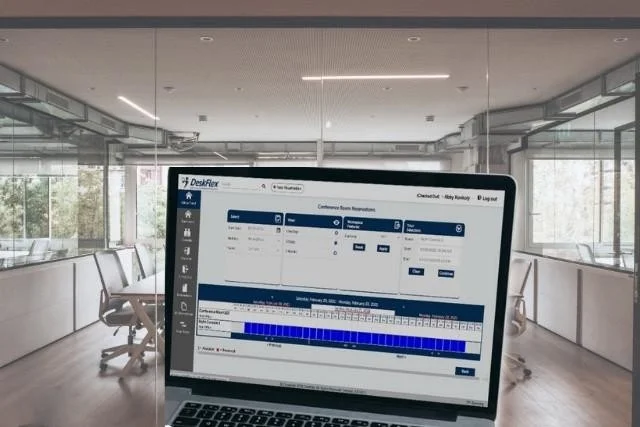
The modern workplace is undergoing a major transformation. Traditional offices are being replaced by intelligent, connected environments designed to support hybrid work, enhance productivity, and improve employee experience. This shift has given rise to the concept of the smart office—a workplace powered by advanced technologies such as artificial intelligence (AI), the Internet of Things (IoT), and cloud-based systems.
In 2026, smart offices are no longer a luxury. They are becoming essential for organizations looking to remain competitive, reduce operational costs, and create flexible, employee-centric workspaces. But what exactly is a smart office, and how does it work?
What Is a Smart Office?
A smart office is a technology-driven workplace that uses connected devices, automation, and data analytics to optimize operations and enhance the work environment. These offices rely on real-time data to make intelligent decisions about space usage, energy consumption, and employee needs.
Unlike traditional offices, smart offices adapt dynamically. For example, lighting adjusts automatically based on occupancy, meeting rooms can be booked instantly through apps, and employees can locate available desks in real time.
At its core, a smart office focuses on three key goals:
- Improving efficiency
- Enhancing employee experience
- Optimizing resource utilization
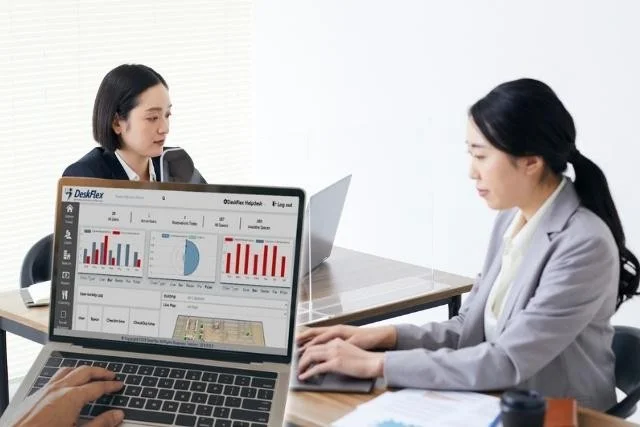
Why Smart Offices Matter in 2026
The rise of hybrid work has fundamentally changed how offices are used. Employees no longer come into the office every day, making space utilization unpredictable. This creates challenges for businesses trying to manage costs and maintain productivity.
Smart offices address these challenges by providing:
- Real-time visibility into workspace usage
- Flexible work environments for hybrid teams
- Improved collaboration tools for distributed workforces
Additionally, employee expectations have evolved. Workers now prioritize flexibility, comfort, and seamless digital experiences. Companies that fail to modernize their workplaces risk losing top talent.
Key Technologies Behind Smart Offices
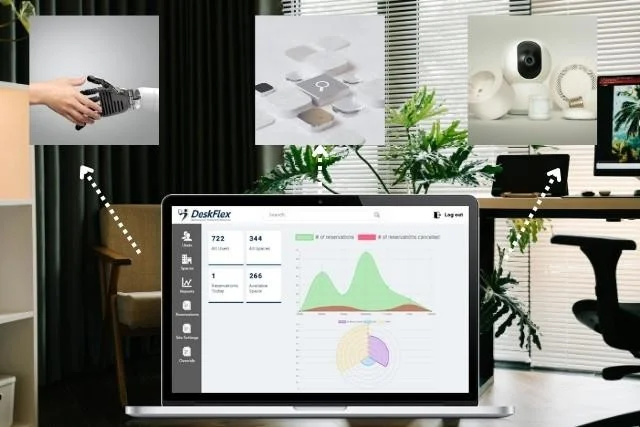
Smart offices rely on a combination of technologies working together to create a connected ecosystem.
1. Internet of Things (IoT)
IoT devices such as sensors and smart lighting systems collect real-time data on occupancy, temperature, and usage patterns. These devices enable automation and help organizations optimize their environments.
2. Artificial Intelligence (AI)
AI analyzes workplace data to provide insights and predictions. For example, it can forecast peak office usage times or recommend optimal seating arrangements.
3. Automation of Room Booking Systems
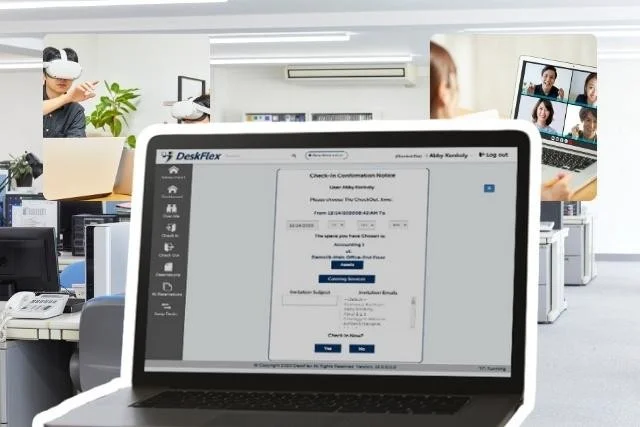
Modern office desks are connected to reservation applications, like DeskFlex, where office technology and management merge to create a flexible working experience.
This innovative office technology displays available meeting rooms to members who wish to work onsite. Members can book these available rooms via their phones or computers, making it easier for those who work hybrid but want to collaborate with their teammates.
4. Cloud-Based Platforms
Cloud systems allow employees to access workplace tools from anywhere. They also enable centralized management of office resources.
5. Remote Working and Collaboration Tools
Video conferences and email messaging are remote collaboration tools in smart offices. These platforms can stimulate productivity among business members, even in the comfort of their remote workplaces.
Office members can collaborate on assignments and manage files through cloud storage solutions, making access to documents and files seamless for real-time collaborative editing.
Management can also monitor their members’ work to help them organize tasks and track the progress of projects to fulfill the goals of a business, all together in one executive suite.
Designing a Smart Office
Creating smart offices involves including technologies that promote a workplace culture of productivity and comfort. Here are some innovative designs that are suitable when building smart offices:
1. Ergonomic Fixtures and Furniture
Desks and spaces that accommodate the individual needs of each business member are sure to boost productivity and task efficiency. Desks that are adjustable by sensors and AI reduce the risk of injuries within the workplace, as everything is done automatically. Ergonomic furniture designs also improve members’ posture, promoting convenience.
2. Desk Booking and Hot-Desking Systems
When designing smart offices, booking desks, especially for members who work from home, requires user-friendly desk booking systems and spaces enabling them to utilize their office spaces for flexible workspaces.
Members can easily manage their workdays, making them able to coordinate with each other when they need to work together in person, as these systems authorize them to see each other’s schedules; this is an excellent innovation while respecting the environment.
3. Sustainable Office Design
A sustainable smart office easily integrates great technology while keeping respect for the environment in mind.
Office lighting is powered by LED lights or solar power, and light and climate control systems are automated, helping to reduce costs and energy consumption.
IoT sensors also monitor energy and space consumption in offices, ensuring that office space is maximized efficiently.
4. Mobile Applications for Office Management
Mobile office management applications are an all-in-one platform for members to navigate their smart offices easily.
They have functions for booking rooms and desks, enabling them to control their spaces’ lighting and air conditioning, and integrating technology to help with their workload.
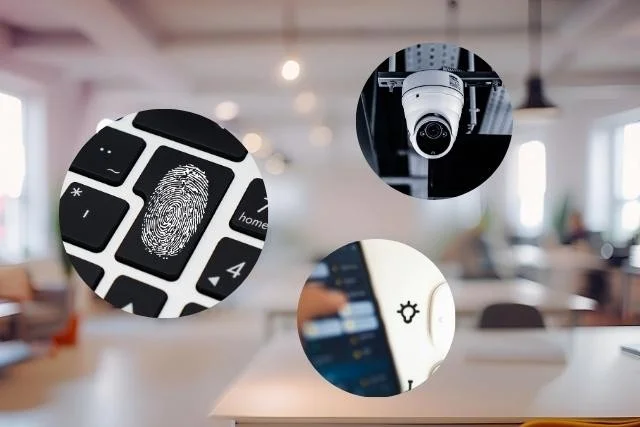
Security and Privacy in Smart Offices
Smart offices require a multi-faceted, preemptive security that does not compromise the members’ and the business’s data. Here are key security measures that should be present in a smart office:
1. Smart Access Control
Smart access controls in smart offices are like two-factor authentication in modern devices. It oversees the business’s and its members’ data security by implementing secure network protocols.
Biometric technology, such as fingerprints and facial recognition, provides a higher level of security when a member clocks in and out for work than commonly used systems.
Visitor management is also implemented with smart access controls. These controls encourage visitors to register in a business’s system beforehand, shortening wait time and ensuring office security.
2. Data Security and Privacy Concerns
Sensitive data about a business and its members is stored in centralized databases, heavily encrypted, to prevent data breaches and unauthorized users from accessing it.
The internet in these offices is also secured with security protocols like Wi-Fi Protected Access 3 (WPA3) and TLS to protect company data from cyber threats and viruses.
3. Surveillance and Employee Safety Measures
Smart access controls, such as biometric authentication, are part of surveillance monitoring in smart offices. They ensure workplace privacy; members credited in the office’s system can access restricted spaces and areas.
AI in analyzing surveillance footage is also a key security measure in smart offices. AI-powered surveillance videos can detect suspicious behaviors within any part of the office to prevent any attempted unauthorized behaviors.
Challenges in Implementing Smart Offices
While smart offices have clear benefits in the modern workplace, businesses that implement this technology in their respective workplaces often face difficulties.
Understanding the challenges of smart office adoption is essential to effectively navigate the advantages they bring.
1. Initial Setup Costs and Investment
The transition to smart offices involves more than buying smart devices; it also includes overhauling the traditional workplace setup to accommodate the changing work atmosphere.
The cost of setting up an office should include upgrades to furniture and systems used. The members’ devices should be up-to-date with AI features and IoT integration.
2. Overcoming Employee Resistance
Innovative office solutions cannot work correctly without the enthusiasm and presence of team members. New technology is often deemed hard to navigate, especially for seasoned employees.
Strong team member training programs and communication within the team are needed to ensure that no one is left behind and that every member is eased into the transition to smart offices.
According to McKinsey data, the shift to automation in the workplace is only successful when employees feel they are not being replaced but empowered by innovative office solutions.
3. Ensuring Data Security and Privacy
Smart offices ensure office security as a top priority. It is technology relying on connected and collaborative systems, with a significant possibility of data breaches occurring.
With the help of IoT-enabled devices and collaboration tools like cloud-based systems, data from members and the company cannot easily be exposed to vulnerabilities.
Security measures such as two-factor authentication, encrypted networks, and biometric systems can amplify security and protection in innovative office workplaces.
4. Compatibility of New Technologies with Existing Systems
Some traditional systems differ from the concepts innovative office technologies bring to the workplace, which can cause confusion and uncertainty for company members.
Technology compatibility issues of newer technologies can lead to downtime, but training can overcome inefficiencies.
Choosing user-friendly platforms that offer quality, innovative office systems is essential so users can seamlessly integrate with new technology.
Top Benefits of Smart Offices
Increased Productivity
Automation reduces manual tasks, allowing employees to focus on meaningful work. Quick access to resources also minimizes downtime.
Better Space Utilization
Smart offices track how spaces are used, helping organizations reduce wasted space and optimize layouts.
Improved Employee Experience
Employees can easily find desks, book rooms, and customize their workspace environment, leading to higher satisfaction.
Cost and Energy Efficiency
Smart systems reduce energy consumption by automatically adjusting lighting and temperature based on usage.
Seamless Hybrid Work
Smart offices support flexible work arrangements by integrating AI digital tools with physical spaces.
Core Features of a Smart Office
A well-designed smart office includes several key features:
- Desk booking systems for hot desking
- Meeting room scheduling tools
- Visitor management systems
- Real-time occupancy tracking
- Workplace analytics dashboards
These features work together to create a smooth and efficient workplace experience.
1. AI and Machine Learning Advancements
AI-driven offices are slowly changing the environmental contribution of businesses in how they manage their spaces and work. With the help of AI, predictive analysis is implemented for office design and allocation of resources.
Team member satisfaction is ensured through the personalization of IoT sensors, which personalize members’ environments according to their preferences.
2. Fully Automated Offices
Smart offices are workplaces that can move on their own. With IoT automating office tasks, automated job scheduling is made possible. It streamlines the workload of members.
Office management is improved because of the implementation of automated office solutions.
3. Virtual Reality and Augmented Reality in Offices
Virtual office tools are reimagining what office collaboration and training are. The use of VR and AR tools in meetings makes the working experience immersive, even when working remotely.
VR and AR are widely presented as ideal tools for remote work to make working creative.
4. The Role of Smart Offices in Hybrid Work Models
Hybrid work solutions are becoming increasingly popular due to the need for flexible working conditions. With smart offices, a flexible workspace design is supported. Both in-person and remote working are encouraged in modern workplace setups.
Conclusion
Smart offices are a technology upgrade and a jumpstart to workplace optimization in the age of digital transformation.
Innovative office solutions raise team member satisfaction, as office management is simplified. They also reduce operational costs, building a future-proof business with innovative office technologies.
It is essential to stay competitive in a technological market; flexible workspace designs improve a business’s decision-making skills with accurate data and analytics offered by innovative office technologies.
So start your Smart Office Journey with DeskFlex!
With DeskFlex, you can quickly set up your smart office! Click here to learn how we can help you implement IoT devices, optimize office space, and increase productivity.