Blog
Blog
Technology in Business: Turning Workplaces into Smart, Efficient Spaces
Business technology has never been a matter of keeping up with the times. The real fast-changing question in the modern workplace is: How do organizations translate technology into quantifiable outcomes? Hybrid scheduling, employee satisfaction: Winners are those who apply digital tools not only to streamline operations but also to create smarter and more flexible spaces.
This is where business technology goes beyond theory and enters the realm of practice. Contemporary organizations do not view it as a supporting activity anymore but as the basis of how work occurs. In digital transformation strategies, daily task scheduling, and so on, the theme is minimizing wasted time, minimizing costs, and building environments in which people flourish.
At DeskFlex, we approach business technology consulting differently. Rather than relying on IT systems or abstract innovation, our solution is based on concrete workplace results—smarter room utilization, improved compliance, and streamlined employee experiences. With the right solutions, your office is more than functional; it is intelligent.
Core Capabilities That Move the Needle
Room & Desk Booking
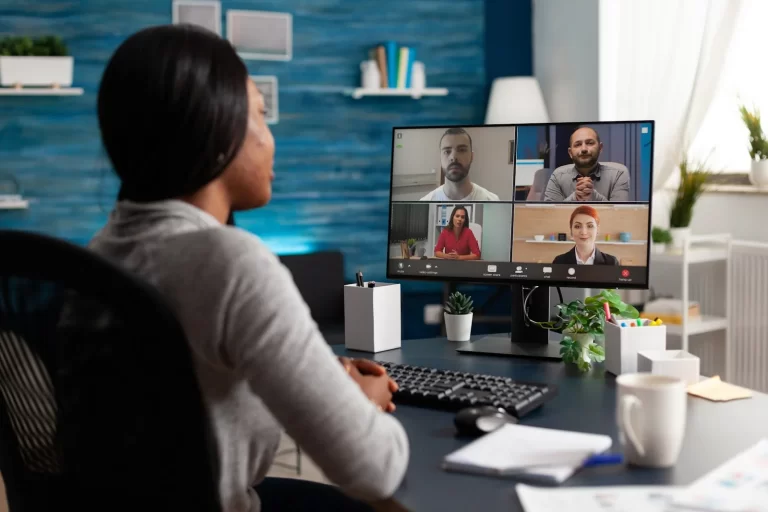
The hybrid workforce requires flexibility. Deskbooking software will enable employees to easily book the appropriate space, either a hot desk, quiet room, or collaboration hub. Features like abandoned meeting protection save on resources, and real-time availability ensures everyone is on track.
Visitor Management
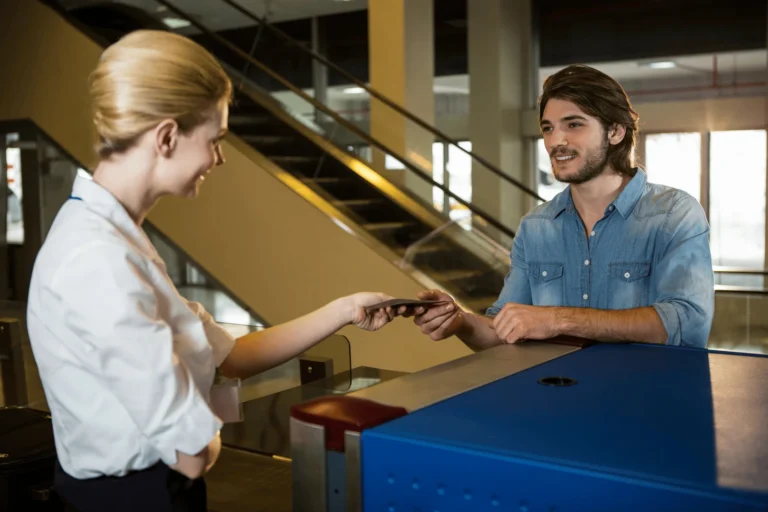
Security and compliance can not be compromised. Visitor-management systems document visits, kiosk check-in procedures, and expedite approval procedures. The result? Greater employee and customer security and assurance.
Analytics & Reporting
Data is the new superpower at the workplace. Office analytics display utilization rates, indicate unused spaces, and notify of cleaning or maintenance schedules. These insights can assist leaders in enhancing resource management that aligns with actual needs.
3D Floor Maps & Status Boards
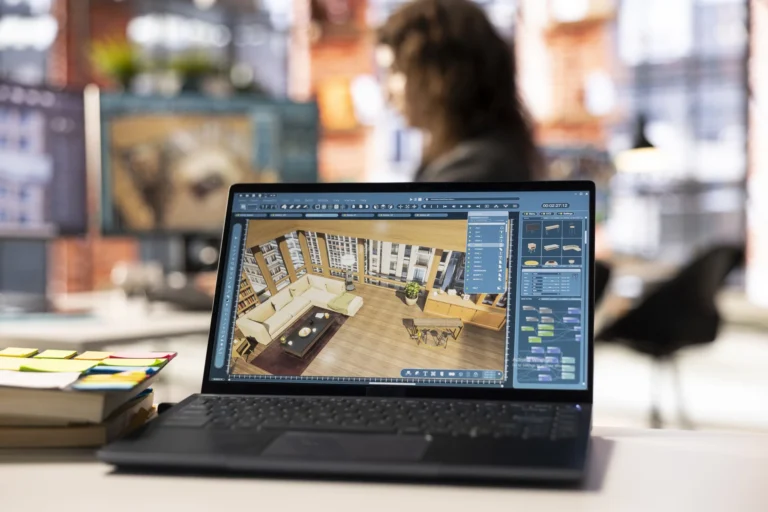
Finding a room should be a matter of minutes. 3D floor maps and real-time status board displays provide clearance in real time. Openness will speed up decision-making and improve the staff experience.
Resource Scheduling & Facility Management
Intelligent offices should have more than desks and conference rooms. They require a complete system of resource reservation, vehicles, training rooms, etc. The combination of facility management and business ensures that assets are at the right place at the right time and this removes bottlenecks.
The Result
What has been created is not only a technology-powered workplace but a technology-transformed one. By combining these capabilities, companies are able to open new dimensions of agility. They assist remote employees, guarantee adherence, and create smarter and more responsive offices.
The strategy of DeskFlex demonstrates that business technology is not a trend to follow. It is concerning the implementation of tools that directly enhance people, processes, and spaces.
Integrations That Reduce Friction
One of the biggest frustrations employees face with business technology is fragmentation. The tools do not communicate with one another, the logins keep increasing, and the process hangs just because somebody forgot to update a calendar.
Digital transformation eliminates such friction, allowing systems to operate not independently, but together. DeskFlex incorporates this philosophy into all integrations, making fragmented workflows a seamless experience.
Microsoft Outlook & Office 365 Integration
Most of the time, employees are in calendars and email. That is why the combination of Microsoft Outlook integration and Office 365 integration is a game-changer. DeskFlex integrates room and desk booking with Outlook, maintaining a schedule and eliminating cases of double-booking.
It also promotes hybrid work policies where the teleworkers can be seen as much as the on-site teams.
Okta Single Sign-On (SSO)
Identity and compliance are crucial in the current security-conscious environment. Okta SSO connections help companies simplify logins and raise cybersecurity awareness.
Workers use one secure credential across every system reducing the chances of breach and avoiding the direct effects of password fatigue. SSO, used in conjunction with cybersecurity awareness training sessions, is a pillar of a safe digital work environment.
Zapier Automation
The business of today requires flexibility and the integration of Zapier offers it. Zapier connects DeskFlex to hundreds of applications, providing automated room-booking notifications, attendance-recording processes, etc.
Such automation systems enable employees to put their energy in high-value activities and eliminate repetitive activities.
Smart Displays & Kiosks
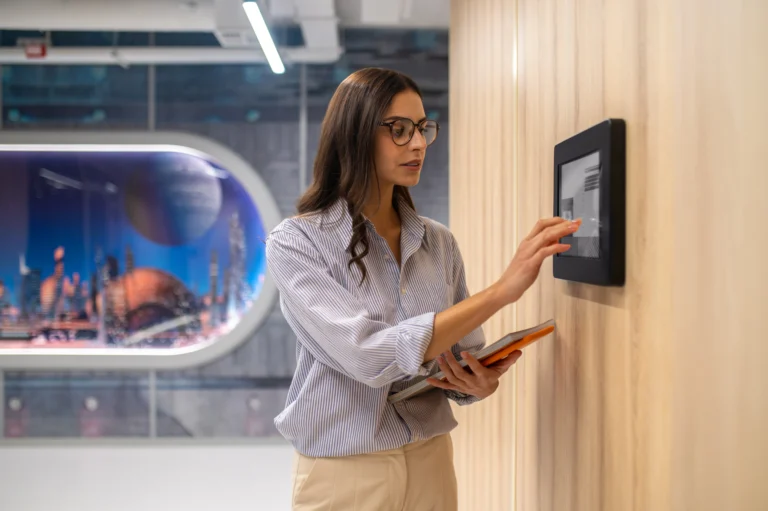
The hybrid offices need visibility. Touchscreen kiosks, status-board displays and workstation panels provide the staff real time information on the rooms availability. They do not just cease to be gadgets, they are the finest smart office technology that eliminates confusion, enhances team collaboration tools and facilitates virtual meeting rooms, enabling employees to locate and book the appropriate set up on short notice.
Visibility is the key to hybrid offices. Touchscreen kiosks, status-board displays, and workstation panels provide employees with real-time information about room availability.
These are not merely gadgets but examples of smart office technology, which has minimized confusion, enhanced team collaboration tools, and enabled virtual meeting spaces by enabling one to easily locate and reserve the appropriate setup on the spot.
Organizations that incorporate these integrations into daily working processes unlock the real potential of tech solutions, which means smarter tools instead of more. It makes governance easy for IT leaders. In the case of HR, it enhances compliance.
For workers, whether at the office or working at home, it lowers friction and makes the working environment less disjointed and more connected.
Use Cases by Team
Technology is not just tools; it is how the various departments utilize them. What one team considers to be tech solutions for business could be perceived by another team as being used differently. DeskFlex is able to revise itself in relation to roles, and thus, all stakeholders will perceive value.
Facilities & Real-Estate Teams
The most important thing to facilities managers is the utilization of available spaces. The use of project management tools and desk booking software helps them to monitor occupancy, decrease unutilized meeting rooms, and plan future office requirements.
Status board displays and 3D floor maps facilitate real-time decisions, whereas analytics enhance resource management in buildings. The outcome is the saving of costs and the more sustainable utilization of office real estate.
IT & Workplace Technology Leaders
In the case of IT, security and governance are first. Okta SSO integration makes identity management easier, and cybersecurity awareness capabilities minimise human error vulnerabilities. With clear audit trails and compliance reporting, IT teams are not afraid that sensitive data is compromised.
The continuity of the data storage solution is guaranteed, and workflow scalability is developed by integrations such as Zapier. In this case, cybersecurity awareness training will be a process embedded to protect the whole workplace.
HR & Operations Teams
The contemporary employee is diverse. HR leaders are connecting hybrid employees and teleworkers, keeping the worker experience consistent for everyone. DeskFlex assists in check-in policy, missed meetings, and visitor policy, ensuring inclusivity. Team collaboration tools and virtual meeting spaces are keeping teams together no matter where they are based balancing flexibility and accountability.
Healthcare Operations (Specialized Use Case)
Hospitals and clinics have their own issues: patient flow and safety, compliance, and flow of appointments. Kiosk check-ins and visitor management systems allow healthcare organizations to manage arrivals and enhance wait time, as well as ensure records are auditable.
This will be complemented by facility management to make sure resources such as consultation rooms and medical equipment are ready at the time they are required. It is the most effective business technology: it helps with the provision of care and regulatory compliance at the same time.
In both cases, DeskFlex is useful in ensuring that business technology is made practical and adaptable. Whether optimizing space by providing facilities, securing systems by IT, managing hybrid policies by HR, or enhancing patient flow by healthcare, the platform can offer one central solution that can be adapted to the task.
ROI & Metrics
Business technology is not just an efficiency driver; it also produces measurable results. CEOs and entrepreneurs will be interested in discovering how investing in schedules, integrations, and automation can reduce costs and increase performance. DeskFlex and its real-time reporting and analytics make those outcomes obvious.
These are a few of the common KPIs organizations use in the workplace:
- Space Utilization: The frequency of utilization of the desks and meeting rooms.
- Booking Lead Time: The extent of advance reservations employees usually make about spaces.
- No-Show Reduction: Effect of protection of abandoned meeting and protection of check-in.
- Occupancy vs. Capacity: The safety of the workplace through being within allowed limits.
- Cleaning Cycles: Smarter scheduling of cleaning based on actual usage instead of fixed routines.Such insights not only aid in creating the best space optimization but also provide HR and operations departments with the evidence they require to demonstrate ROI. By linking these steps to a set of strategic objectives, executives will have a clearer understanding of how the use of tech solutions can drive business growth.
Implementation Roadmap of Technology at Workplace
Implementation of the workplace systems may seem daunting, but a clear map will ensure an assured, company-wide implementation.
- Pilot: Start with one floor, or department. Test desk booking software, virtual meeting spaces and check-in regulations. Get employee input to streamline work processes.
- Policy: Make it easy: establish guidelines concerning the cancellation, booking priorities and visitor check-ins. Incorporate cybersecurity awareness training to help the employees feel confident and secure in using the new tools.
- Rollout: Implement the platform in phases rather than in a single phase. Allow the automation systems to deal with reminders and keep status board displays updated on real time. HR and IT ought to collaborate in order to facilitate the process.
- Training & Support: Facilitate the transition of a team. Give them a brief, practical guide-map and checklist on the usage of smart office technology and room displays and team collaboration tools.
- Continuous Optimization: Measure output using office analytics and feedback loops. Use predictive and artificial intelligence applications to enhance long-term planning. In the long term, consider the use of AI in business and generative AI in business to predict schedules, utilization forecasts, and automated reporting.
This roadmap will make technology a growth engine rather than a tool. It will reduce real-estate expenses, enhance worker experience, and assist remote employees, which will produce tangible returns.
DeskFlex demonstrates that business technology does not necessarily need to be abstract in its implementation. Intelligent automation, defined KPIs, and organized policies help businesses create intelligent ecosystems that will evolve over time.
Conclusion
Companies no longer have to discuss whether to embrace business technology; they are selecting the appropriate combination that will provide quantifiable outcomes. DeskFlex gives organizations everything they need, from desk booking software and visitor compliance to automation systems, smart office technology, and detailed office analytics.
DeskFlex is a single platform that can be customized to your objectives, regardless of whether you are a facilities manager who wants to utilize space more efficiently, an IT leader who needs to enhance security, or an HR executive who needs to support remote employees. It puts everyday planning on a strategic footing.
Business technology consulting is not just about software; it is also about reconsidering the way you work. DeskFlex will assist your business in not relying on a jumble of tools, but rather on straight workflows or unstructured resources, rather than smooth performance.
👉 Ready to see it in action?
Request a live demo today. See how DeskFlex enhances virtual meeting spaces, accelerates scheduling, and realizes the payoff of intelligent workspace planning.
Frequently Asked Questions (FAQs)
How does DeskFlex integrate with Outlook and Office 365?
DeskFlex integrates with your calendar products and automatically updates your calendar reservations in Outlook and Office 365. This eliminates duplicate bookings, and scheduling becomes easy for both the ground-based and remote employees.
What about visitor compliance and security?
Visitor management system is an integrated system that controls check-in, approvals, and record keeping. Combined with cybersecurity awareness practices, it keeps sensitive areas safe and up to standard.
Do status boards update in real time?
Yes. The status board displays of DeskFlex is directly connected to the booking system to ensure that employees can always see the real-time room and desk availability regardless of whether they are at the office or attending virtual meeting spaces.
How can this improve the employee experience?
DeskFlex increases employee experience, making it easier to schedule, minimizing no-shows, and offering a clear view. It also enables hybrid policies and helps in connecting hybrid employees, and provides a unified experience to teams working in different locations.
Is AI really part of business technology now?
Absolutely. DeskFlex is designed to adapt to the office. With AI in business and generative AI in businesses; leaders can anticipate usage, predict high demand, routine work, and provide artificial intelligence applications, allowing leaders to have a more profound understanding to make better decisions.


Support
Demo
Blog