


Blog

10 Networking Tips for Professionals to Build Strong Connections at the Workplace
Networking is often discussed as a career skill, but in practice, it is a working habit. In its simplest definition, networking is the ongoing process of building professional relationships that create shared value and business development over time. Not long ago, networking meant swapping business cards, navigating polite small talk, and hoping one of those conversations turned into something fruitful. That version still exists, but it is no longer enough. Work now happens across offices, home setups, coworking spaces, and video calls. Yet the need for a strong professional connection has only grown.
Networking remains one of the most reliable drivers of career advancement, business development, and long-term collaboration. Ideas move faster when relationships already exist, and trust is built through repeated, often unremarkable interactions that compound over time. In hybrid and flexible workplaces, those interactions need intention.
This guide will explore practical networking tips for in-person, virtual, and hybrid settings, grounded in how modern teams actually work.
Why Networking Matters in the Modern Workplace?
Networking helps build strategic professional relationships that can propel career development forward. However, networking opportunities do not always appear immediately.
Professional networking supports several critical outcomes:
- Career advancement through visibility, sponsorship, and trust
- Knowledge sharing that prevents teams from operating in silos
- Cross-team collaboration that improves execution and decision-making
- Business growth strategies rooted in relationships rather than cold outreach
In the context of hybrid work, there is an added complexity. When people no longer sit near each other by default, connection must be designed. Offices, meeting rooms, and shared spaces become networking tools when they are used deliberately, not passively.
10 Essential Networking Tips for Professionals
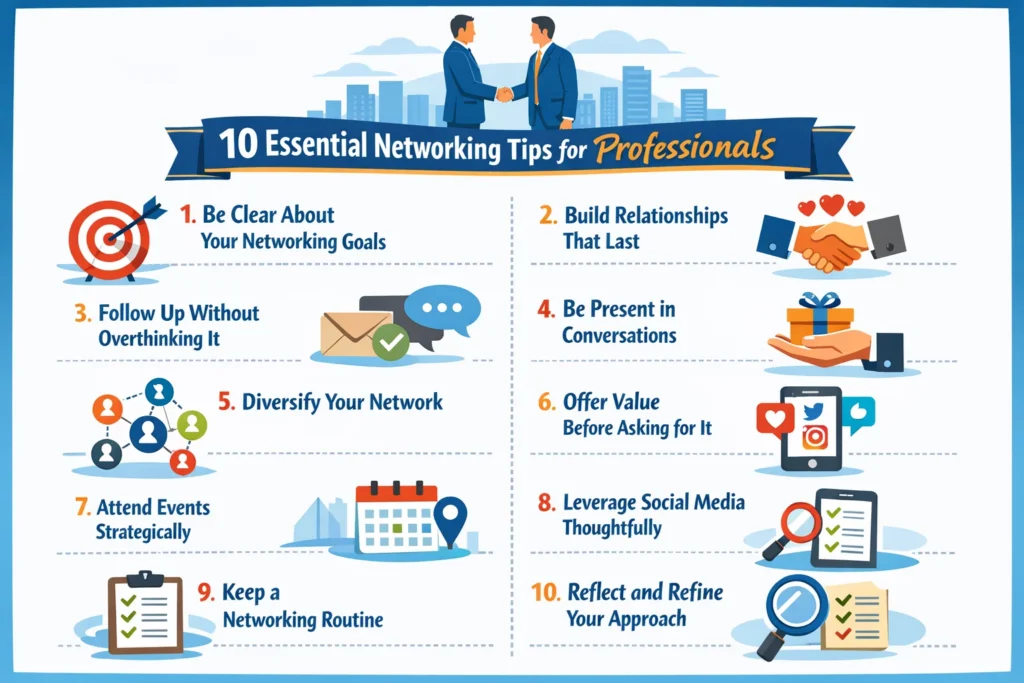
Effective networking techniques have little to do with performance and everything to do with clarity and follow-through. Here are some essential networking tips to keep in mind:
1. Be Clear About Your Networking Goals
Before attending a networking event, conference, or even an internal meeting, it helps to pause and define why you are there. Networking without intent often leads to pleasant conversations that fade quickly. Your focus might shift depending on context. At times, it is about career growth or internal mobility. At others, it is business development, partnership building, or learning from peers.
Clear goals shape better conversations. They will also make it natural to recognize which relationships deserve continued attention.
2. Build Relationships That Last
Professional networking works best when it is grounded in genuine interest. Strong connections simply begin by:
- Listening carefully instead of waiting to respond
- Asking questions that reflect real curiosity about the work
- Offering insight or support without immediately expecting something back
Networking is rarely a transaction. It is a long game built on trust, credibility, and consistency.
3. Follow Up Without Overthinking It
Many networking efforts fail quietly after the initial interaction. A thoughtful follow-up keeps the connection alive and signals reliability. A short message within a few days is often enough. Referencing the conversation, sharing a relevant resource, or suggesting a light next step, such as a coffee chat, helps move the relationship forward. LinkedIn and email both work. What matters more is showing up and letting them know you are reliable and enthusiastic about collaborating.
4. Be Present in Conversations
Active presence is key. Avoid distractions like checking your phone or scanning the room while someone is speaking. Show engagement through eye contact, nodding, and thoughtful responses. Being present demonstrates respect and makes the other person feel valued, which is the foundation of a meaningful professional connection.
5. Diversify Your Network
Networking isn’t just about connecting with people at your level or industry. Seek out colleagues across departments, senior leaders, and even external peers. Diverse networks provide fresh perspectives, new opportunities, and insights that may not come from your immediate circle. Variety enriches your professional growth.
6. Offer Value Before Asking for It
Networking thrives on reciprocity, but that doesn’t mean immediate returns. Share knowledge, introduce contacts, or provide support without expecting anything in return. Being genuinely helpful positions you as trustworthy and someone people want to engage with over time.
7. Attend Events Strategically
Whether online webinars, industry conferences, or casual meetups, choose events that align with your goals. Quality matters more than quantity. Prepare by researching attendees or speakers, planning conversation starters, and knowing what outcomes you hope to achieve from the interaction.
8. Leverage Social Media Thoughtfully
Platforms like LinkedIn, Twitter, or professional forums aren’t just for posting updates. They are tools for meaningful engagement. Comment on posts with insight, share resources relevant to your network, and connect with people strategically. Online visibility can reinforce relationships made offline.
9. Keep a Networking Routine
Networking is not a one-time activity. Dedicate time weekly or monthly to connect, follow up, or check in with contacts. A consistent approach prevents relationships from fading and ensures you stay top-of-mind when opportunities arise.
10. Reflect and Refine Your Approach
Not all networking efforts yield immediate results. Take time to reflect on what worked, which conversations were meaningful, and where you could improve. Adjust your strategy, refine your goals, and continue learning. Networking is a skill, and like any skill, it improves with conscious practice.
Networking Tips for Virtual and Hybrid Employees

Networking in virtual and hybrid settings requires greater intention and attention. Without physical presence, how you show up in these spaces carries more weight. These are some important things to keep up your sleeve:
Be Professional in Virtual Interactions
Virtual networking leaves little room for ambiguity. How you show up is often how you are remembered. A few video meeting etiquette tips to keep it professional tend to matter more than people expect:
- Prioritize clear audio and video over everything else: Clear audio and video signals that you are prepared, dependable, pay attention to details, and just show professionalism.
- Join prepared: Knowing who is in the session and why helps you contribute without forcing visibility.
- Stay visibly engaged: In virtual settings, distraction is easier to notice than focus. Attention becomes a form of professionalism. It is essential to actively participate, put distractions aside, and provide feedback.
Engage Actively in Online Events
Online networking rewards participation, not attendance. Simply logging in rarely leads to a connection. Effective engagement often looks like this:
- Asking relevant questions during the session: This helps create a moment others remember, or clarifies what is unclear.
- Adding substance in chats or discussion threads: Short, thoughtful contributions go further than frequent comments.
- Following up with context: Referencing a specific point from the event makes outreach feel natural rather than transactional.
Visibility comes from contribution. Conference networking still works online, but it favors preparation and follow-through over spontaneity.
Common Mistakes to Avoid When Networking
Most networking mistakes are not obvious in the moment. Even experienced professionals fall into habits that weaken their networking over time.
These are some mistakes to watch out for:
- Only reaching out when something is needed: When contact is limited to requests, relationships start to feel transactional. People notice the absence of ongoing interest, even if the outreach itself is polite. This behavior reduces willingness to engage or support.
- Overlooking internal networking: External relationships matter, but influence within an organization is often built from the inside out. Neglecting internal connections limits awareness of ongoing work.
- Skipping follow-ups: Being consistent with follow-ups is where many work relationships flourish. A simple, brief message that references a previous conversation will do. Without follow-ups, interactions remain stagnant and are easily forgotten.
- Poor virtual communication: Allowing weak virtual communication to define how you are perceived can undo much of the good work you’ve done.
Showing up inconsistently, speaking without clarity, or appearing disengaged on calls sends signals about whether you are interested or just not. Over time, those signals shape how seriously others take you. A strong workplace networking strategy is rarely rooted in dramatic gestures; it is built on steady consistency. Even the small, thoughtful actions repeated over time tend to compound into meaningful professional relationships.
Conclusion
Networking is no longer just about exchanging business cards or attending events. It is an ongoing, intentional practice that drives career growth, collaboration, and long-term professional success. Building meaningful connections requires clarity, consistency, and genuine engagement whether in-person, virtual, or hybrid. By setting clear goals, nurturing relationships, offering value, and reflecting on your approach, you can transform casual interactions into trusted professional networks.
Remember, effective networking is not about the number of contacts you make but the quality and depth of your connections. With deliberate effort and thoughtful follow-through, every conversation becomes an opportunity to grow your influence, share knowledge, and create lasting value in the workplace.
Frequently Asked Questions (FAQs)
What are networking tips?
Networking tips are practical ways to build professional relationships that stand the test of time. These help people start conversations, stay visible in the workplace, and turn one interaction into an ongoing connection.
Why are networking tips important for professionals?
Because careers rarely move forward on skill alone. Networking tips help professionals build trust, stay top of mind, and create opportunities before they are formally available.
What are the best networking tips for professionals?
The most effective networking tips are straightforward. Be clear about your purpose, engage genuinely, and follow through consistently. Relationships built this way tend to last because they are not forced.
How can networking improve workplace collaboration?
Networking fosters familiarity across teams, reducing friction and improving communication. When people know each other, collaboration becomes faster and more effective.
What are effective networking tips for the workplace?
Effective workplace networking includes using shared spaces, scheduling informal touchpoints, and engaging beyond immediate tasks. Consistency matters more than volume.
How does hybrid work affect networking?
Hybrid work reduces spontaneous interaction, which means networking no longer happens by default. Professionals need to plan time and space for connection instead of relying on proximity or chance encounters.
What are virtual networking tips for remote teams?
Virtual networking tips focus on presence, participation, and follow-through. Engagement during events and thoughtful follow-ups help relationships extend beyond screens.
How can DeskFlex support workplace networking?
DeskFlex helps teams connect by making desks, meeting rooms, and hybrid schedules easier to coordinate. When logistics are clear, people are more likely to plan time together and collaborate naturally.
Why is networking important?
Networking helps you:
Discover job and business opportunities
Learn from others’ experiences
Build professional visibility
Gain referrals and recommendations
Grow long-term career or business success
Can networking help business growth?
Yes. Networking supports business growth by:
Creating partnerships
Generating referrals
Finding customers or vendors
Increasing brand credibility