


Blog
Blog

Why Meeting Room Booking Systems Are Essential for Modern Offices in 2026
Modern offices rely on teamwork, but managing shared meeting spaces has become increasingly challenging as organizations grow. As teams expand and schedules overlap, traditional meeting room coordination often causes delays, confusion, and workplace frustration. These challenges affect productivity and make it harder for employees to focus on collaboration and meaningful discussions. Meeting room booking systems address these issues by adding structure, visibility, and automation to everyday office operations.
What Is a Meeting Room Booking System?
A meeting room booking system is a digital solution that helps employees reserve meeting rooms quickly and easily. It displays real time availability, allowing teams to identify suitable spaces without manual emails or coordination. By centralizing room management, these systems keep bookings accurate, transparent, and accessible across the entire organization.
What Are the Benefits of Meeting Room Booking Systems?
A Meeting Room Booking System offers significant advantages for modern workplaces by streamlining scheduling, improving space utilization, and enhancing overall operational efficiency. Below are the key benefits explained clearly and professionally.
1. Eliminates Double Bookings
One of the primary benefits of a meeting room booking system is preventing scheduling conflicts. Real-time availability updates ensure that rooms cannot be reserved by multiple teams at the same time.
Result: Reduced confusion and smoother meeting coordination.
2. Improves Workplace Productivity
Employees can quickly view available rooms and book them instantly without back-and-forth emails or manual coordination.
Result: Less time spent managing logistics and more time focused on productive work.
3. Seamless Outlook and Calendar Integration
Modern systems integrate with Microsoft Outlook and Microsoft 365, allowing users to reserve rooms directly within their existing calendar interface.
Result: Simplified scheduling and automatic synchronization across platforms.
4. Enhances Space Utilization
Advanced reporting and analytics provide insights into room usage patterns, peak booking times, and underutilized spaces.
Result: Better planning and optimized use of office real estate.
5. Reduces Operational Costs
By analyzing usage data, organizations can make informed decisions about consolidating or redesigning meeting spaces instead of expanding unnecessarily.
Result: Lower real estate and facility management costs.
6. Supports Hybrid Work Environments
Meeting room booking systems help coordinate in-office collaboration days and manage shared workspaces effectively.
Result: Improved flexibility and seamless hybrid work management.
7. Provides Data-Driven Reporting
Managers can generate reports on booking frequency, departmental usage, and no-show rates.
Result: Smarter decision-making and improved resource allocation.
8. Improves Employee Experience
A smooth, automated booking process creates a modern and professional workplace environment.
Result: Higher employee satisfaction and better collaboration experiences.
Why Traditional Meeting Room Scheduling Fails?
Managing meeting rooms manually has become inefficient in modern offices. Traditional methods rely heavily on emails, spreadsheets, or coordination through the front desk, which often leads to mistakes and miscommunication.
As organizations grow and schedules become more complex, these outdated systems struggle to keep up, resulting in wasted time, frustrated employees, and disorganized collaboration. Modern teams need a solution that provides real-time visibility, accuracy, and flexibility, which traditional scheduling simply cannot deliver.
- Reliance on Manual Coordination: Manual scheduling requires employees to send emails, call colleagues, or check with the front desk before confirming a room. This process is time-consuming and prone to human error. Even small miscommunications can cause double bookings, missed meetings, or delays that affect productivity. Relying on manual coordination makes it difficult to manage multiple meetings simultaneously, especially in larger offices.
- Frequent Double Bookings: Without a centralized system, multiple teams can accidentally reserve the same room at the same time. Double bookings disrupt important meetings, force last-minute changes, and create frustration among employees. These conflicts also impact overall office efficiency, as employees waste time negotiating room swaps instead of focusing on work. A reliable digital system eliminates these conflicts by showing real-time availability for all employees.
- Unused or Wasted Meeting Rooms: Traditional booking methods often fail to track room usage accurately. Some rooms remain reserved but empty because of canceled or forgotten bookings. This leads to wasted office space, missed opportunities for other teams, and reduced productivity. By contrast, Automated systems can monitor room utilization and optimize meeting room layouts to free up space for other teams.
- Inability to Adapt to Dynamic Workplaces: Modern offices are increasingly flexible, with hybrid schedules and changing team requirements. Traditional scheduling methods cannot adjust quickly to last-minute changes, making it hard to coordinate meetings efficiently. Hybrid teams need a system that adapts to shifting priorities, supports hybrid work, and allows easy booking from anywhere. Without such flexibility, collaboration suffers and office resources are underutilized.
What Are Data-Driven Insights with Advanced Reporting?
Data-driven insights with advanced reporting refer to the ability of a system—such as a meeting room booking system—to collect, analyze, and present actionable data that supports informed business decisions. Instead of relying on assumptions, organizations use real-time analytics to understand how meeting spaces are utilized and where improvements can be made.
In a meeting room booking system, advanced reporting tracks metrics such as room utilization rates, peak booking hours, no-show frequency, and departmental usage. These insights are displayed through dashboards and downloadable reports that can be printed, emailed, or exported in CSV format for deeper analysis.
By leveraging data-driven insights, organizations can optimize space usage, reduce operational costs, improve planning strategies, and support hybrid workplace management. Advanced reporting transforms room scheduling from a simple administrative function into a strategic decision-making tool that enhances efficiency and productivity.
What Is Driving the Shift Toward Smart Workspace Management?
The shift toward smart workspace management is driven by evolving workplace trends, including hybrid work models, flexible scheduling, and the need for greater operational efficiency. As organizations adapt to changing employee expectations and fluctuating office occupancy, traditional space management methods are no longer sufficient.
Smart workspace management leverages digital tools such as meeting room booking systems, desk booking software, and real-time analytics to optimize space utilization and improve workplace coordination. These technologies provide visibility into how office resources are used, enabling businesses to reduce waste, control costs, and enhance employee experience.
By adopting smart workspace solutions, organizations gain data-driven insights, improved scheduling accuracy, and better support for modern work environments. This transformation allows companies to create more agile, efficient, and productive workplaces.
How Does Seamless Outlook Integration Simplify Meeting Room Scheduling?
Seamless Outlook integration simplifies meeting room scheduling by allowing users to reserve rooms directly within Microsoft Outlook. Instead of switching between multiple platforms, employees can select a meeting room as a resource while creating a calendar invite, and the system automatically checks availability in real time.
When a room is selected, the meeting room booking system instantly syncs with Microsoft 365 or Exchange, confirms the reservation, and updates the room calendar. Any changes—such as rescheduling or cancellations—are automatically reflected across all calendars, preventing double bookings and scheduling conflicts.
By integrating with Outlook, organizations streamline coordination, reduce administrative effort, and ensure accurate, real-time visibility of meeting room availability. This seamless experience improves productivity and enhances overall workplace efficiency.
Choose DeskFlex for Smarter Meeting Room Booking
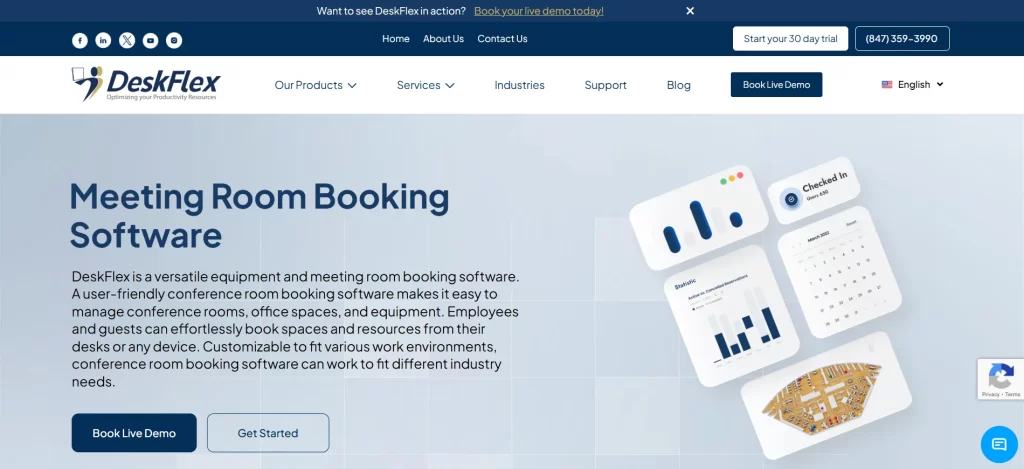
Managing meeting rooms manually can be time-consuming, prone to errors, and frustrating for employees. DeskFlex provides a modern, reliable solution that simplifies scheduling while eliminating conflicts and wasted time. It helps offices operate efficiently, supports hybrid and in-office teams, and ensures meetings run smoothly without unnecessary logistical challenges.
Key Features of DeskFlex
- Real-Time Room Availability
Employees can instantly see which rooms are free, making booking faster and reducing scheduling conflicts. - Seamless Calendar Integration
DeskFlex syncs with Outlook, Google Calendar, and other platforms, ensuring reservations are automatically updated and visible to all team members. - Flexible Booking Options
Teams can reserve rooms for short or long periods, repeat meetings, or make last-minute changes effortlessly. - Automated Notifications
Booking confirmations, reminders, and alerts help prevent no-shows and keep everyone informed without extra effort. - Support for Hybrid Workplaces
DeskFlex accommodates both in-office and remote employees, allowing smooth collaboration across different work models.
With these features, your team can focus on productive meetings instead of managing schedules manually.
Future-Proof Your Office with Smart Meeting Room Technology
As hybrid work continues to evolve, businesses that invest in intelligent room scheduling solutions gain a competitive advantage. A modern meeting room booking system not only improves daily operations but also provides long-term strategic value through actionable workspace data.
Organizations that prioritize digital transformation in workspace management see measurable improvements in productivity, cost control, and employee satisfaction.
Ready to Optimize Your Meeting Spaces?
Upgrade from manual scheduling and outdated systems. Discover how DeskFlex Meeting Room Booking System can help your organization reduce conflicts, increase efficiency, and make data-driven workspace decisions.
👉 Schedule a demo today and transform the way your office manages meeting rooms.
Frequently Asked Questions (FAQs)
What is a meeting room booking system?
A meeting room booking system is a digital solution that allows employees to reserve, manage, and track conference rooms in real time. It prevents double bookings, integrates with calendars like Microsoft Outlook, and provides reporting tools to optimize workspace utilization.
How does a meeting room booking system work?
A meeting room booking system connects to calendar platforms such as Microsoft Outlook or Microsoft 365. Users select a room as a resource when scheduling a meeting, and the system automatically checks availability, confirms the booking, updates the calendar, and sends notifications.
Can meeting room booking software integrate with Outlook?
Yes. Modern meeting room booking software integrates directly with Microsoft Outlook and Exchange. Rooms appear as resource calendars, allowing users to create, modify, or cancel reservations with a single click while ensuring real-time synchronization.
What are the benefits of using a conference room reservation system?
Key benefits include:
Elimination of double bookings
Real-time availability tracking
Automated notifications
Utilization reporting
Improved hybrid workplace coordination
How does meeting room booking software improve office efficiency?
It reduces scheduling conflicts, minimizes administrative workload, provides data insights on room usage, and helps organizations make data-driven space planning decisions.
Is meeting room booking software suitable for hybrid workplaces?
Yes. A meeting room booking system supports hybrid work models by enabling teams to coordinate in-office collaboration days, reserve shared spaces efficiently, and monitor occupancy trends.
Can managers track meeting room usage?
Yes. Advanced systems provide detailed analytics, including peak booking times, no-show patterns, and utilization rates. Reports can be exported in CSV format for further analysis.
How does a meeting room booking system reduce costs?
By analyzing space utilization data, organizations can optimize room usage, reduce unused spaces, and avoid unnecessary real estate expansion.