Hot desking has become a standard practice in modern offices embracing flexibility and collaboration. Employees no longer have permanently assigned seats and instead use available desks when they arrive. This approach supports hybrid schedules and better space utilization across organizations.
While the system offers convenience, it also requires shared responsibility and professional behavior. Without clear etiquette, misunderstandings and distractions can quickly affect productivity. That is why understanding proper hot desk etiquette is essential for every employee. Simple habits and respectful actions help create a smooth and positive shared work environment
What Is Hot Desking?
Hot desking is a workplace arrangement where employees use any available desk during their office visit. There are no permanently assigned workstations for individual employees. This system allows companies to optimize space and reduce unused desks. It also encourages interaction among colleagues from different departments. However, success depends on cooperation and mindful workplace conduct.
What Is Hot Desk Etiquette and Why It Matters?
Hot desk etiquette refers to the respectful behaviors expected in shared workspaces. It provides clear guidance on how employees should use flexible seating arrangements. Since desks are shared among multiple individuals, cooperation becomes essential each day. These behavioral standards help maintain structure in dynamic office environments.
1. Promoting Fairness and Shared Responsibility
Hot desking works best when everyone follows the same basic principles. Etiquette helps maintain order, fairness, and comfort for all employees. Respecting shared spaces prevents misunderstandings and unnecessary workplace conflict. When responsibilities are shared equally, the office environment feels balanced and organized.
2. Supporting Productivity and Focus
A well managed shared workspace allows employees to concentrate without distractions. Good etiquette reduces noise, clutter, and interruptions throughout the day. When each person follows proper conduct, workflow becomes smoother and more efficient. This consistency creates a dependable environment where employees can perform confidently.
3. Enhancing Employee Experience
Employees feel more comfortable when shared spaces remain clean and professional. Respectful behavior builds trust among coworkers who rotate through the same desks. A positive shared environment improves morale and workplace satisfaction. Small acts of consideration make a meaningful difference in daily office life.
4. Maintaining a Professional Workplace Culture
Hot desk etiquette reflects the overall standards of an organization. Professional conduct reinforces accountability and mutual respect among teams. When employees follow clear behavioral expectations, the workspace remains productive and welcoming. Strong etiquette ultimately supports a healthier and more collaborative office culture.
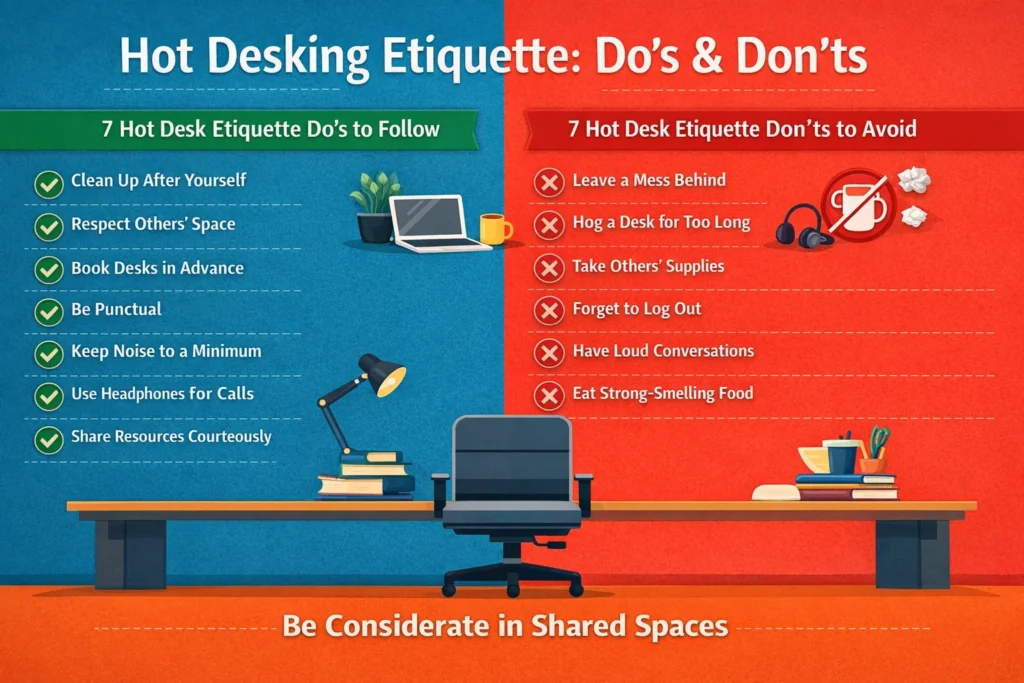
7 Hot Desk Etiquette Do’s to Follow
Following these seven hot desk etiquette do’s helps maintain a clean, respectful, and productive shared workspace. Simple habits can make a big difference for everyone in the office.
1. Clean Your Desk Before Leaving
Always leave the workspace in the same condition you would expect to find it. Remove personal belongings, throw away trash, and organize any moved items properly. Wipe the desk surface if necessary to maintain cleanliness and hygiene standards. A clean desk shows respect for coworkers who will use the space after you.
2. Respect Desk Availability and Reservations
Use only desks that are available or officially assigned to you. Avoid assuming a desk is free without verifying its status. If your schedule changes, release the space so someone else can use it. Respecting reservations prevents confusion and maintains fairness across the team.
3. Keep Noise Levels Considerate
Shared offices amplify sound, which can easily distract others. Use headphones for music, videos, and virtual meetings. Speak at a moderate volume when collaborating with colleagues. Taking long phone calls to a quieter area helps protect everyone’s focus.
4. Protect Confidential Information
Hot desking requires extra awareness of information security. Lower your voice when discussing sensitive projects or client details. Avoid leaving confidential papers exposed on shared desks. Lock your computer whenever you step away, even for a short time. Protecting data reflects professionalism and safeguards company interests.
5. Use Shared Resources Responsibly
Office supplies and equipment are intended for collective use. Take only what you need and avoid unnecessary waste. Return borrowed items in good condition and on time. Responsible usage ensures all employees have fair access to resources.
6. Be Mindful in Common Areas
Kitchens, lounges, and collaboration zones are shared by everyone. Clean up after yourself and keep these spaces organized. Respect that some coworkers may use these areas for quiet work. Courtesy in common spaces strengthens workplace relationships and morale.
Keep Exploring
More guides on workplace management, desk booking, and hybrid work.
7. Stay Home If You Are Unwell
Illness spreads quickly in shared environments with rotating desks. If you feel unwell, prioritize your recovery and avoid coming to the office. Inform your supervisor or team in advance about your absence. Choosing to rest at home demonstrates responsibility and consideration for colleagues.
7 Hot Desk Etiquette Don’ts to Avoid
Avoiding these seven common hot desk mistakes helps maintain a respectful, organized, and productive shared workspace. Following proper etiquette keeps everyone comfortable and focused.
1. Do Not Leave Personal Items Behind
Avoid treating a shared desk as permanent personal space. Leaving belongings behind can inconvenience the next person using the workstation. Take everything with you at the end of your session. Keeping desks neutral ensures fairness and smooth transitions.
2. Do Not Occupy Reserved Desks
Ignoring desk reservations can create frustration and conflict. Always verify that a space is truly available before sitting down. Using someone else’s reserved desk disrupts schedules and productivity. Respecting boundaries maintains trust among coworkers.
3. Do Not Create Excessive Noise
Loud conversations and speaker use can disturb an entire section of the office. Be aware that others may be handling tasks requiring deep concentration. Use designated private areas for extended calls or discussions. Noise awareness contributes significantly to a productive environment.
4. Do Not Leave Clutter or Food Behind
Food crumbs, spills, and clutter create an unprofessional appearance. They can also attract pests and increase cleaning responsibilities. Shared desks should remain tidy and welcoming at all times. Maintaining cleanliness reflects personal accountability and respect.
5. Do Not Misuse Shared Equipment
Avoid monopolizing printers, meeting rooms, or other office tools. Extended use during busy hours may delay others’ work. Use equipment efficiently and free it once your task is complete. Fair access promotes cooperation and operational efficiency.
6. Do Not Discuss Confidential Matters Openly
Open workspaces are not suitable for private business discussions. Sensitive information can be overheard unintentionally by others nearby. Choose enclosed rooms or secure communication channels when necessary. Maintaining discretion protects both the company and its clients.
7. Do Not Come to the Office When Sick
Working while ill reduces your effectiveness and may affect others. Shared desks increase the risk of spreading illness among employees. Prioritize health and return only when you are fully recovered. Responsible decisions support a safer and more dependable workplace.
Best Practices for Hot Desking in Hybrid Offices
Hybrid offices combine remote flexibility with in person collaboration, which makes planning essential. Practicing a few smart habits can help employees transition smoothly between home and shared workspaces.
1. Plan Your Office Days Strategically
Schedule your office visits around meetings, team projects, and collaborative tasks. Choose in person days when face to face interaction adds real value. Thoughtful planning reduces unnecessary desk usage and improves space efficiency. It also helps teams coordinate seating arrangements more effectively.
2. Arrive Fully Prepared
Bring all essential tools such as chargers, headsets, and notebooks. Being prepared prevents repeated trips home for forgotten items. Self sufficiency allows you to settle into any available desk quickly. Preparation saves time and keeps your workday productive.
3. Embrace Digital Organization
Store important files in secure digital platforms instead of relying on paper documents. Digital access ensures you can work efficiently from any desk location. It also prevents confidential materials from being left behind accidentally. A paperless approach supports both security and sustainability efforts.
4. Communicate Clearly with Your Team
Coordinate seating plans when working closely with specific colleagues. Inform teammates about your office schedule to align collaboration efforts. Clear communication avoids confusion about desk usage and availability. Strong coordination strengthens teamwork in flexible office settings.
5. Practice Consistency and Mutual Respect
Follow shared workspace guidelines each time you visit the office. Consistent behavior builds trust among coworkers using the same environment. Respect for shared spaces encourages accountability across the organization. When everyone commits to these practices, hybrid work becomes smoother and more efficient.
Conclusion
Hot desking offers flexibility and encourages collaboration in today’s modern workplaces.
Its success, however, relies on mutual respect, accountability, and professional behavior from every employee.
By following simple do’s and avoiding common mistakes, shared workspaces remain organized, comfortable, and welcoming. When everyone acts responsibly, the entire team benefits from a more productive, efficient, and harmonious work environment.