


Blog
Creating an Introvert Friendly Workspace for Modern Teams
Organizations today recognize that productivity is dependent on providing an atmosphere in which varied working styles may thrive, and demands are addressed accordingly. Research indicates that introverts constitute between 30-50% of the global workforce, yet many offices continue to encourage the daily presence of everyone, design open spaces, and favor high social interaction.
Thus, it is important not to neglect or alienate a large part of the workspace and to allow them to grow with a workspace design that is considerate of physical environments. Introverted employees, or employees in general, will be able to concentrate better, handle stress more effectively, and solve more complex problems.
Businesses often notice significant improvements in employee health, engagement, and focus when they provide quiet spaces, privacy options, and comfortable work environments. Modern workplace design should aim to promote balance. There should be areas where employees can work together and think together.
This guide will examine evidence-based practices to help organizations develop practical ways to design offices where silent innovators can shine.
Who is an Introvert in the Workplace?
An introvert is not simply someone who dislikes people or teamwork. In a professional setting, introverts are often highly engaged contributors who perform best in environments that support concentration and reflection.
Some of the common workplace traits include:
- Preference for deep focus over rapid multitasking
- Strong analytical and creative thinking abilities
- Sensitivity to noise, interruptions, and visual distractions
- Energy gained from quiet work rather than constant interaction
Traditional open offices frequently conflict with these needs. Continuous conversations, unpredictable interruptions, and visual movement can create mental fatigue and reduce performance.
This challenge highlights the importance of office design for introverted employees, which focuses on creating environments that respect cognitive diversity. Instead of forcing workers into a single mode of interaction, organizations benefit from offering varied work settings that match different tasks and personalities.
The Impact of Workspace Design on Productivity and Well-being
The workspace design directly influences how employees think and work. For introverts, workplace conditions directly affect their productivity and job satisfaction.
1. Distractions and Deep Work
Open offices tend to add to distractions. According to workplace psychology research, employees can lose up to 20 minutes of concentration after a single distraction. There is a common case that is better for introverts: deep work. Deep work is the ability to focus on strategic planning, writing and research, programming or analysis, and creative problem solving. The ability to work longer, concentrate better, and produce high-quality output is enabled by quiet environments.
2. Cognitive Load and Sensory Overload
Introverted employees are more sensitive to external stimuli, such as movement, noise, and visual clutter. This can easily lead to overload and exhaustion. Moreover, common stressors like loud conversations, frequent walk-bys, bright light or glare on the screen, and constant notifications often affect decision-making.
3. Focused Workflows
Introverts tend to prefer systematic work schedules with minimal disruptions. The ease with which employees switch between teamwork and individual work can be achieved when the workspace layout allows them to follow the same routine. Companies that invest in workplace design for productivity often report reduced workplace stress, higher task completion rates, and enhanced retention and interaction.
Introvert-Friendly Office Design Principles
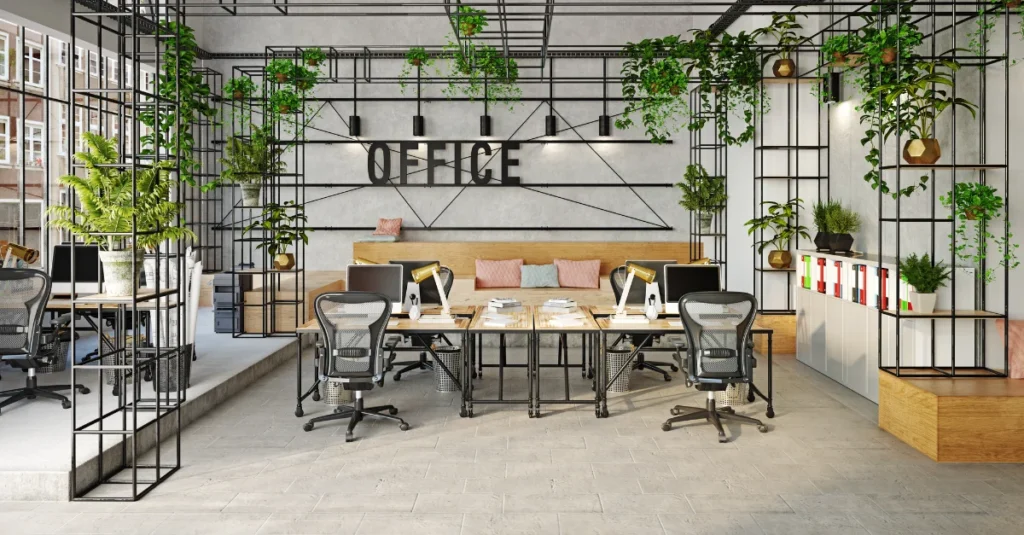
Establishing an introvert-friendly office layout does not involve removing collaboration. Instead, it is a case of providing deliberate design options that facilitate focus.
1. Quiet Zones and Low-Traffic Areas
Quiet zones are distraction-free areas allocated for focus. Best practices include choosing a quiet place that isn’t a break room, limiting phone calls and discussions, and showing people when they are in focus mode. One real-world example is a financial department that set up a quiet work zone during busy reporting periods to reduce interruptions and improve accuracy.
2. Acoustics and Noise Control (Sound-Absorbing Materials)
Effective office acoustics for introverts essentially improve comfort. This can be remediated through adding acoustic ceiling panels, soft flooring or carpet tiles, sound-absorbing wall materials, and noise-masking systems. A perceived reduction in noise levels can be significantly decreased even by minor acoustic improvements.
3. Adjustable Privacy Screens & Enclosures
A closed office is not required for all employees. Privacy solutions can be adjusted to flexible yet non-permanent walls. Some examples are desk-mounted panels, movable partitions, and semi-enclosed workstations. These tools enable the workers to manage themselves according to the needs of the tasks.
4. Dedicated Focus Rooms or Pods
Dedicated focus rooms and pods create a conducive environment for collaboration. It is ideal for writing reports, virtual meetings, and, most especially, sensitive, confidential jobs. One can make or take a call without distracting or disrupting everyone in the office, ensuring everyone’s comfort and efficiency.
5. Flexible Seating for Choice & Autonomy
The element of choice is a significant factor in productivity. Workers work more effectively when they choose conditions that are consistent with their work. Flexible seating can be arranged through having collaboration tables, lounge thinking areas, and individual work booths. Satisfaction and performance are enhanced by autonomy.
6. Natural Light and Reduced Visual Distractions
Lighting influences both mood and cognition. Design measures such as placing desks near natural light, using neutral colors rather than high-contrast graphics, and reducing wall displays should be implemented. Less taxing visual situations facilitate long-term focus.
7. Clear Signage and Flow Patterns
Researching how people use an office is more useful than most companies believe. These trends affect how well operations run and how much they accomplish. Adopting individual work paths, creating quiet areas, posting signs indicating the acceptable noise level, and changing path patterns are all ways to make the workplace healthier for everyone. It’s less likely that someone will cause trouble by accident when there are clear signs around.
Balancing Open Collaboration and Quiet Work Zones
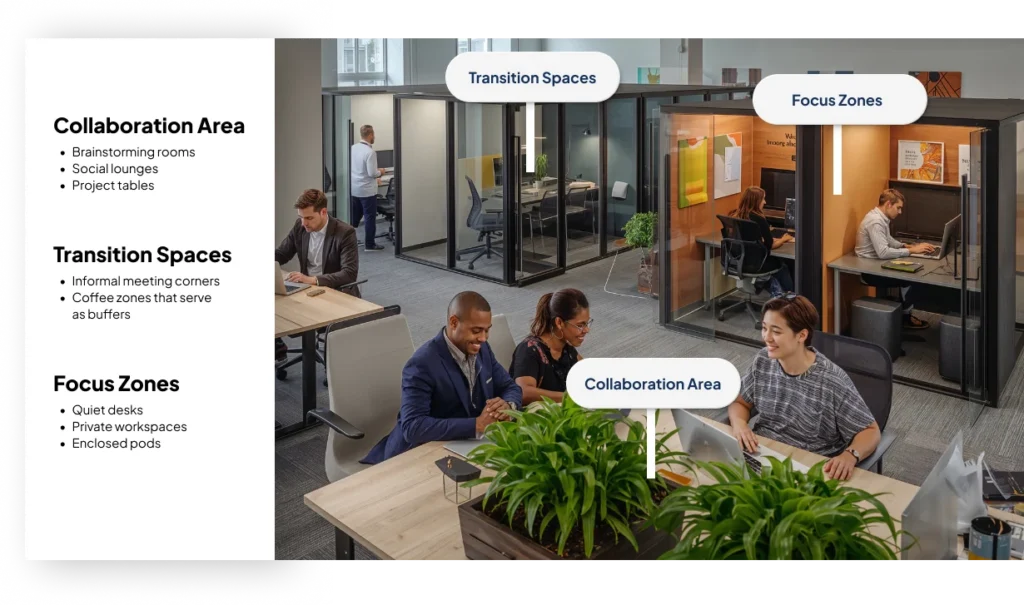
Effective offices do not do away with cooperation; they deliberately organize it. There is a common balanced layout to take three zones.
1. Open Collaboration Zone
This area is designed for teamwork, idea sharing, and spontaneous discussions. It encourages communication and keeps teams connected without booking formal meeting rooms every time they need to talk.
Key features may include:
Shared desks or bench seating
Whiteboards and brainstorming walls
Casual seating or standing tables
Easy access to power outlets and screens
This zone supports creativity and quick decision-making. However, it should be positioned away from quiet areas to prevent noise disruption.
2. Quiet Focus Zone
The quiet zone is dedicated to deep, uninterrupted work. Employees who need concentration for writing, coding, planning, or analysis benefit from a distraction-free environment.
Key features may include:
Individual desks with privacy panels
Sound-absorbing materials (acoustic panels, carpets)
Clear “quiet area” policies
Minimal foot traffic
This space helps improve productivity and reduces cognitive overload, especially for employees who thrive in low-stimulation environments.
3. Flexible Transition Zone
The third zone acts as a bridge between collaboration and focus areas. It allows employees to move between different work modes without fully committing to either extreme.
Key features may include:
Phone booths for private calls
Small huddle rooms
Lounge seating for informal conversations
Reservable workstations
This flexible area prevents the office from feeling rigid. It also reduces disruption by giving employees options instead of forcing them into open or silent environments only.
Measuring the Success of Introvert-Friendly Workspace Design
Creating an office that is introvert-friendly is not the end. Organizations also need to evaluate the outcomes of their workplace changes to determine whether they are achieving measurable results. The presence of performance data can help leaders make sound and data-driven decisions to continue improving the employee experience.
Key Metrics to Monitor
The effectiveness of office managers and HR leaders may be measured using quantitative and qualitative indicators:
- Focus time: Can workers put in more hours before quitting?
- Use of workplace rates: Are there quiet places and personal workspaces that people regularly book?
- Surveys of employee satisfaction: Are workers indicating they are less stressed and more focused?
- Changes in the direction of cuts: Are organizations shifting toward asynchronous work that is more effective?
- Productivity deliverables: Does getting the workspace ready ahead of time make project schedules better?
As organizations discover, when work environments are quieter, employees naturally embrace healthy work cycles. Teams start planning their day around deliberate teamwork and dedicated execution rather than multitasking.
Conclusion
The design of the workplace has shifted away from aesthetics toward productivity, efficiency, and comfort. Nowadays, workplace design becomes a strategic driver of performance, engagement, and organizational success. By acknowledging that almost half of the working population might be more comfortable in quieter settings, a company could unlock hidden productivity.
Effective workspace design for introverts does not alienate employees; it empowers them. Silence areas, acoustic design, comfortable seating, and reservation systems create environments where deep thinkers can share their best ideas.
Cognitive diversity allows organizations to create a more inclusive and innovative workplace. Through this, employees will be able to become more creative, collaborate more effectively, and achieve better business results when they feel their environment supports them.
Frequently Asked Questions (FAQs)
What is workspace design for introverts?
Workplace design for introverts is a planning approach that emphasizes quiet spaces, privacy, and flexible workspaces to support deep focus and reduce sensory overload.
Why is office design important for introverted employees?
Office design is critical for introverted personnel because settings are a major source of distraction for well-being and focus. Introverts can operate optimally when office environments are created with their needs in mind.
How can offices support introverts in open-plan layouts?
Offices can support introverts with open-plan layouts by introducing acoustic treatments, silent areas, privacy screens, and bookable focus rooms into the open space.
What are the best workspace features for introverts?
Some of the best workspace features for introverts include silent workstations, adjustable privacy screens, acoustics, natural light, and movable furniture.
How does hybrid work benefit introverts?
The hybrid models enable employees to select the environments that match the requirements of the tasks, striking a balance between working remotely and being in the office.
How does workspace design affect productivity?
Workspace design affects productivity by allowing for work with fewer distractions, enhancing concentration, and boosting staff morale, resulting in quantifiable performance outcomes.