


Blog

DeskFlex vs. Robin: Comparing Workplace Management Solutions
In 2026, to successfully manage modern workplaces with all their complexities, it will take a lot more than simply making desks and rooms available for booking.
Organizations will be required to implement hybrid work automation, ensure compliance with workplace safety regulations, and provide occupancy insights—all while having the ability to customize solutions to meet their specific needs.
While many organizations utilize Robin (and its desk booking feature), DeskFlex provides a comprehensive workplace management solution.
The article will delve into the reasons why DeskFlex has become the preferred choice for growing companies, large corporations, educational institutions, hospitals, government agencies, and hybrid organizations.
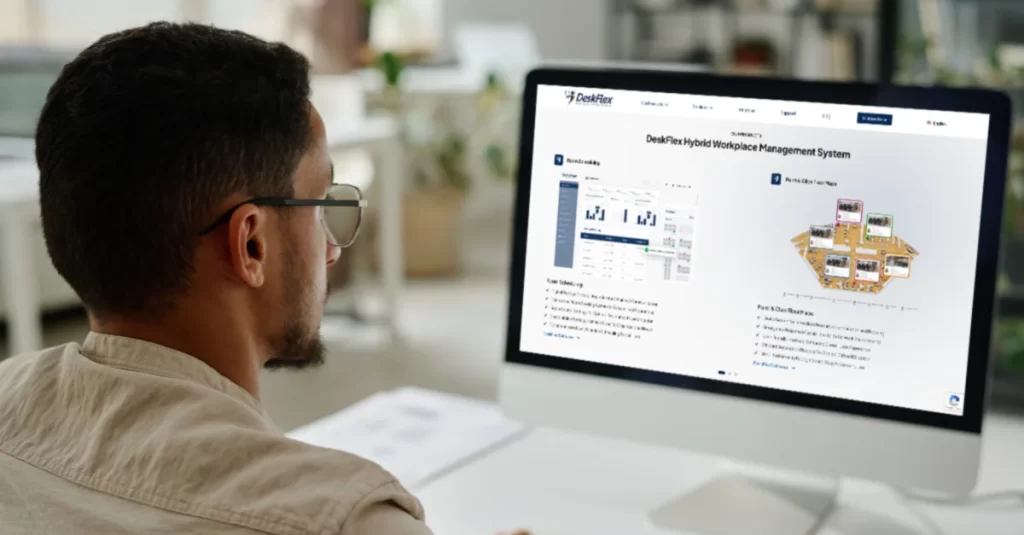
Why DeskFlex is the Smarter Choice?
Robin is great for basic workplace coordination. However, if you want to take your game to the next level, DeskFlex is designed for a premium workplace transformation.
Here’s why:
- Broader Feature Set: DeskFlex will provide all of your needs, as it is an all-inclusive workspace solution that allows you to manage your workspace from a single application, from desk reservation to guest sign-in/out.
- Built-in Contact Tracing: DeskFlex has a native Contact Tracing function that maps user interactions, utilizes Bluetooth and IoT data to track proximity, and generates compliance reports to meet regulatory requirements.
- IoT Sensor Integrations: Using smart occupancy sensors, heat/motion detectors, and beacons, DeskFlex automates the process of verifying whether the person scheduled to occupy the space is actually occupying it.
- Room, Desk, Asset, & Parking Scheduling: Aside from booking spaces at your workplace, DeskFlex also allows users to schedule equipment, parking spots, shared devices, company cars, and specialty rooms. It makes it suitable for large companies (universities, hospitals) and multi-site organizations.
- Custom Workflows: Companies can create customized workflows using DeskFlex to meet their specific booking rules, approval processes, booking limits, and health and safety protocols, all tailored to their operational needs.
- Better Enterprise Support: Robin’s standard package offerings do not cover customized implementations, custom configuration options, data migrations, and industry-specific support.
- More Economical: The advanced features of DeskFlex are bundled into one package, eliminating the need for costly add-ons and allowing for significant cost savings for medium-sized businesses and enterprise customers.
DeskFlex vs Robin: Feature-By-Feature Comparison
DeskFlex and Robin both streamline hybrid work. However, they have different strengths. While Robin focuses on straightforward booking, DeskFlex leans toward more robust resource management and additional features.
Here’s how they compare.
1. Desk Booking & Workspace Management
DeskFlex: DeskFlex offers a highly robust desk hoteling solution that can support multiple types of bookings (hot desking, fixed desk booking, etc.). While providing users with the option to make recurring bookings, automatically cancel unused bookings, view a map of available workspaces in real-time, and set custom rules based on department, team, or other criteria.
DeskFlex allows managers to fully automate their workflow for approving desk assignments and will work across a user’s mobile application, web browser, or a kiosk at the office.
Robin: Robin offers a much simpler experience for checking into a desk using an application or a QR code with a simple user interface; however, it does not offer as many options for automating workflows or creating custom booking rules.
2. Room Scheduling & Conference Management
DeskFlex: DeskFlex provides an array of room booking tools to help you manage your meeting spaces, including calendar integration with Google and Outlook.
Additionally, it allows for display-mounted room signs, automatic in/out checking, and the attachment of resources (such as equipment or catering) to meetings, as well as resolving meeting conflicts.
Robin: Robin offers standard room reservation and calendar synchronization functionality, but lacks the more advanced features such as auto-enforcement of occupancy and scheduling of shared resources.
3. Contact Tracing & Workplace Safety
DeskFlex: DeskFlex has all the contact tracing elements built into it, allowing you to track user access (logins) at your workstations. It also works with both IoT devices and Bluetooth beacons, enabling you to track team member movement.
Users can use a QR code to check in, and if a team member reports they are ill, you will receive a real-time alert regarding any employees who may have been exposed.
DeskFlex also offers tools to ensure compliance with health regulations, including team member surveys, vaccination status tracking, and customizable safety policies. Additionally, it provides notifications when specific areas reach maximum capacity based on occupancy levels.
Robin: Robin does not have native contact tracing capabilities, nor does it have workflows for exposure or any automation for enforcing safety policies. DeskFlex has a massive advantage by a wide margin.
4. Visitor Management
DeskFlex: DeskFlex offers a robust, enterprise-ready visitor management solution featuring customizable check-in forms and health screening options, among other key features, all of which are critical for hospitals, government agencies, and large organizations.
Robin: Robin provides basic visitor registration and check-in functions; however, it lacks advanced routing, security controls, and enterprise configuration capabilities.
5. IoT Integrations & Occupancy Sensors
DeskFlex: DeskFlex incorporates a range of devices, such as smart occupancy sensors, heat and motion detectors, and Bluetooth beacons, to confirm employees’ actual work locations in real-time.
This integration is done while providing a wide range of detailed information regarding the use of their assigned space.
The results can then assist companies to identify common trends among their employees’ movements within the office, determine how best to allocate available resources, and demonstrate compliance.
Robin: Robin has a minimal array of devices integrated into its platform and therefore relies primarily upon users checking in via an application, which is often inaccurate and easily circumvented.
6. Analytics & Reporting
DeskFlex: DeskFlex offers comprehensive analysis capabilities, including custom reports, real-time dashboard views, and utilization summaries of all types of spaces (e.g., desks, rooms, etc.).
It also includes equipment, cross-organization comparison data, exportable compliance data, and real-time “heat maps” that display the current flow of people and usage trends.
Robin: Robin’s analytical capabilities include some of the same general-use data; however, they provide access to this data only through several pre-defined dashboards that do not allow users to customize the format of the presentation.
7. Integrations & Customization
DeskFlex: DeskFlex has been developed for companies that require high levels of customisation in terms of their booking policies, workflows, automated events, resource usage restrictions, and interdepartmental process workflows.
The company supports a wide variety of detailed API based integrations and can be integrated into all major HR systems, Active Directory, Microsoft Outlook, Google Workspace, and other security products.
Robin: Robin integrates with many typical office software applications, it provides users with much less ability to configure the product to meet the unique needs of each organisation.
8. Scalability & Industry Coverage
DeskFlex: DeskFlex has a scalable architecture that enables it to support the diverse needs of various industries, including hospital campuses and state government agencies, which rely heavily on the product’s advanced scheduling features.
Robin: Robin is primarily suitable for smaller to medium-sized corporate offices that require only basic desk and meeting space scheduling features, and have limited or no regulatory compliance or health-related issues.
9. Pricing & Value
DeskFlex: DeskFlex has a variety of price models (and scalable) to fit the size of your teams and locations, and bundles many of their products (desk booking, meeting room booking, visitors, contact tracking, and health/safety products).
These packages are affordable and, accordingly, less likely to require you to purchase other software.
Robin: Robin separates their prices for the different types of space (desks, meeting spaces, etc.) and also for advanced features. The result is a higher total price as a company grows.
DeskFlex vs Robin
| Feature | DeskFlex | Robin |
|---|---|---|
| Desk Booking | ✔ Flexible and comprehensive | ✔ Simple booking |
| Room Scheduling | ✔ Full resource capability | ✔ Basic scheduling functions |
| Contact Tracing | ✔ Functional contact tracing | ❌ Not included |
| IoT Sensors | ✔ Wide variety of sensor technologies | ❌ Few options |
| Visitor Management | ✔ Customized & enterprise-ready | ✔ Simple check-in |
| Hybrid Work Planning | ✔ Yes | ✔ Less comprehensive |
| Analytics | ✔ Extensive reports | ✔ Standard and pre-built |
| Integrations | ✔ APIs + HR + Access systems | ✔ Standard applications only |
| Industries Supported | ✔ All (enterprise+) | ✔ Mostly corporate office environments |
| Pricing | ✔ Flexible, bundled | ❌ Charges extra for additional products |
| Customization | ✔ High degree of customizability | ❌ Limited custom options |
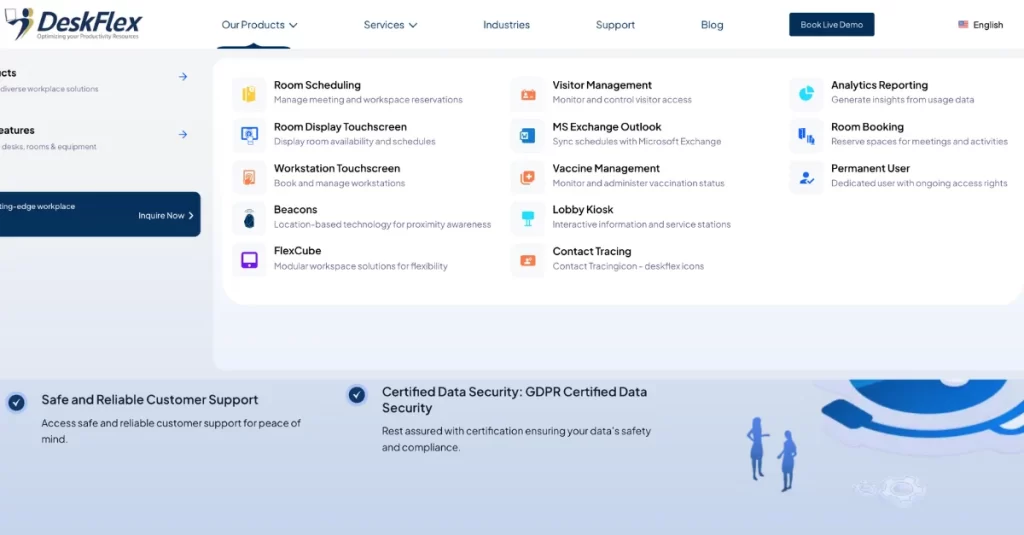
Why DeskFlex Is the Better Choice in 2026
In 2026, the most effective workplaces are those that strike a balance between adaptability and comprehensive systems. Let’s take a look at how DeskFlex meets those needs:
- A Complete Workplace Management Suite: DeskFlex provides desk and meeting room reservation systems, visitor management, asset reservations, hybrid work planning, contact tracing, IoT-based monitoring, and analytics.
- Built For Enterprise Workflows: Whereas Robin has a more standard way of working across its customer base, DeskFlex was designed to adapt to the unique working styles of individual customers.
- Better Value For Money: In addition to providing more capabilities than Robin, you also have lower subscription costs because you do not have to subscribe to multiple applications.
- Stronger Safety & Compliance Tools: DeskFlex currently leads the industry in workplace safety as it can perform real-time contact tracing, enforce occupancy rules at desks and rooms, and provide detailed dashboards to help customers ensure compliance.
- Ideal For Fast-Growing Global Teams: Multiple locations, departments, and workflows can be managed effortlessly.
Conclusion
DeskFlex proves to be a more innovative and more complete alternative to Robin. If you only want a simple desk booking system, then Robin would be fine; however, for those who require a comprehensive workplace management platform, it would be better. Or a business that needs a wide array of tools such as scalable options, customizable solutions, safety and regulatory compliance tools, IoT sensors, hybrid support, and advanced data analytics, DeskFlex is the best and most capable solution now and in the future.
Are you ready to upgrade your workplace?
Schedule your free DeskFlex demo and explore how our platform can streamline bookings, enhance efficiency, and transform your hybrid workplace.
DeskFlex allows you to install self-service, desk booking, and lobby visitor kiosks to enable easy workplace management. Elevate your office space with the kiosk solutions provided by DeskFlex.
Frequently Asked Questions (FAQs)
What is the main difference between DeskFlex and Robin?
DeskFlex offers more capabilities in terms of workspaces, rooms, resources, and scheduling, whereas Robin is primarily an easier way to schedule rooms and coordinate basic workplace tasks.
Why choose DeskFlex over Robin?
DeskFlex offers more advanced automation and tracking of equipment, as well as contacts, employees, and seating arrangements, with the ability to track and manage different departmental booking processes within your company.
It makes it more ideal and suitable for a company or business that values its time and investment.
Does DeskFlex offer more features than Robin?
Yes, DeskFlex has more features than Robin, including room and desk booking, equipment reservations, auto-check-in/checkout, contact tracing, and enterprise-level analytics.
Is DeskFlex more customizable than Robin?
Yes, using DeskFlex, you can configure booking rules, attach resources, create approval workflows, and integrate other systems tailored to your organization’s operations.
Does DeskFlex support contact tracing?
Yes, DeskFlex has native contact tracing, which allows for tracking of team member check-ins, seat assignments, and meeting attendees. Robin does not natively include this capability.
Which platform is better for hybrid workplaces?
DeskFlex is the preferred choice for hybrid work environments, as it can handle hot-desking, flexible room bookings, team member check-in tools, and live updates on available space.
Which solution is better for large enterprises?
DeskFlex is typically better for large enterprises due to scalability, automation, multi-location support, and more advanced resource management capabilities.
Is DeskFlex more cost-effective than Robin?
Generally yes. DeskFlex provides more features than Robin at the same price point. It is the most affordable option when considering both room scheduling and desk management.
Which solution offers better analytics and reporting?
DeskFlex has more comprehensive analytics and reporting compared to Robin. Some of the capabilities included in DeskFlex’s reporting are usage reports, occupancy trends, no-show tracking, and space optimization recommendations.
How can I switch from Robin to DeskFlex?
It is easy to migrate from Robin to DeskFlex as they provide onboarding services and data migration assistance.
Aside from that, they also provide a step-by-step guide for implementing DeskFlex into your workplace with little to no disruptions.