DeskFlex

Want to see DeskFlex in action? Book your live demo today!
What is Performance Analytics A Complete Guide

What is Performance Analytics? A Complete Guide

Organizations today operate in environments where data is generated at every step of the process. From employee productivity and system performance to customer behavior and financial outcomes, data plays a central role in decision making.

However, collecting data alone does not create value. Many businesses struggle to interpret the information they already have and turn it into meaningful action. This gap often leads to missed opportunities and inefficient operations.

Performance analytics helps bridge this gap by transforming raw data into actionable insights. It allows organizations to evaluate how different parts of the business perform and where improvements are needed.

In this guide, you will learn what performance analytics is, how it works, and how it applies across different industries and business functions.

What is Performance Analytics

Performance analytics is the process of collecting, measuring, and analyzing data to evaluate the effectiveness and efficiency of systems, processes, or individuals.

It provides a structured approach to understanding performance by focusing on measurable outcomes rather than assumptions. Organizations use performance analytics to monitor progress, identify trends, and make informed decisions.

This approach can be applied across various areas such as business operations, marketing campaigns, financial performance, employee productivity, and technology systems.

Why Performance Analytics is Important?

Performance analytics plays a critical role in helping organizations improve efficiency, reduce uncertainty, and remain competitive in a rapidly changing environment. By turning data into meaningful insights, businesses can make smarter decisions and align their strategies with real performance outcomes.

1. Improves Decision Making

Performance analytics provides data driven insights that reduce guesswork and uncertainty in decision making. Leaders can rely on accurate information rather than assumptions when evaluating options and choosing the best course of action. This leads to more confident decisions that are aligned with actual business performance and measurable results.

2. Enhances Operational Efficiency

Organizations can use performance analytics to identify inefficiencies within processes and workflows. By analyzing how resources are used, they can optimize operations and eliminate unnecessary delays or waste. This results in smoother operations, better productivity, and improved overall performance across the organization.

3. Supports Strategic Planning

Performance analytics offers a clear understanding of trends and patterns over time. These insights help businesses anticipate changes and prepare for future challenges or opportunities. With a stronger foundation of data, organizations can develop strategies that are realistic, proactive, and aligned with long term goals.

4. Increases Accountability

Measurable performance metrics create transparency across teams and departments. When performance is tracked and clearly reported, individuals and teams become more accountable for their outcomes. This encourages responsibility, improves alignment, and ensures that everyone is working toward shared organizational objectives.

Types of Performance Analytics

Performance analytics can be divided into different types based on how data is analyzed and used to support decision making. Each type serves a unique purpose and helps organizations move from understanding the past to shaping the future.

1. Descriptive Analytics

Descriptive analytics focuses on understanding past performance by summarizing historical data. It answers the question of what has already happened within a system or process. Organizations use descriptive analytics to track key metrics, monitor trends, and review past outcomes. This provides a clear snapshot of performance over a specific period.

Example:

A company reviews last quarter’s sales report to understand revenue trends and identify which products performed the best.

2. Diagnostic Analytics

Diagnostic analytics goes deeper by identifying the reasons behind past outcomes. It answers the question of why something happened. This type of analysis examines relationships between data points and uncovers root causes of problems or unexpected results. It helps organizations move beyond surface level observations.

Example:

If sales dropped in a specific month, diagnostic analytics can reveal that the decline was caused by reduced marketing activity or supply chain delays.

3. Predictive Analytics

Predictive analytics uses historical data along with statistical models to forecast future outcomes. It answers the question of what is likely to happen next. By identifying patterns and trends, organizations can anticipate future scenarios and prepare accordingly. This helps reduce uncertainty and improve planning.

Example:

An ecommerce business analyzes past customer behavior to predict which products are likely to see higher demand during the upcoming holiday season.

4. Prescriptive Analytics

Prescriptive analytics builds on predictive insights by recommending actions that can lead to the best possible outcomes. It answers the question of what should be done next. This type of analytics combines data insights with decision models to guide strategy and optimize results. It is often used for complex decision making.

Example:

A logistics company uses prescriptive analytics to determine the most efficient delivery routes, helping reduce fuel costs and improve delivery times.

How Performance Analytics Works?

Performance analytics transforms raw data into meaningful insights by following a structured and continuous process. Each stage plays a crucial role in helping organizations understand performance and make informed decisions.

1. Data Collection

The process begins with collecting data from multiple sources across the organization. These sources may include business applications, customer platforms, financial systems, and operational tools. Each system captures valuable information about activities, behaviors, and outcomes, creating a comprehensive dataset for analysis. Accurate and consistent data collection ensures a reliable foundation for performance evaluation.

2. Data Processing and Analysis

Once the data is collected, it is organized and analyzed to uncover patterns, trends, and relationships. This stage helps identify performance gaps, inefficiencies, and opportunities for improvement. By examining correlations and comparing different data points, organizations gain a deeper understanding of what is working well and what requires attention.

3. Insight Visualization

After analysis, the data is transformed into visual formats such as dashboards, charts, and reports. These visual tools make complex information easier to understand and interpret. Clear visualization allows teams and leaders to quickly grasp key insights without needing advanced technical knowledge.

4. Decision Making and Action

The final step focuses on using insights to guide decisions and actions. Decision makers rely on the presented data to optimize processes, improve performance, and align strategies with real outcomes. This step ensures that performance analytics delivers real value by turning insights into measurable improvements across the organization.

Applications of Performance Analytics Across Industries

Performance analytics is widely used across various industries and business functions to improve efficiency, enhance decision making, and drive better outcomes. By analyzing data across different areas, organizations can gain valuable insights that support growth and long term success.

1. Business Operations

Organizations use performance analytics to monitor workflows, track productivity, and optimize resource allocation. By understanding how processes perform, businesses can identify inefficiencies and improve operational effectiveness.

2. Marketing and Sales

Marketing and sales teams rely on performance analytics to evaluate campaign results, customer engagement, and conversion rates. These insights help refine strategies, improve targeting, and maximize return on investment.

3. Finance

In finance, performance analytics is used to track revenue, manage expenses, and measure profitability. It supports budgeting, forecasting, and financial planning by providing a clear picture of financial health.

4. Human Resources

Human resources teams use performance analytics to assess employee productivity, engagement, and retention trends. These insights help improve workforce planning, talent development, and overall employee experience.

5. Information Technology

IT teams depend on performance analytics to monitor system performance, identify potential issues, and maintain reliability and security. This ensures that technology systems operate efficiently and support business needs.

6. Customer Experience

Businesses use performance analytics to understand customer behavior, preferences, and feedback. These insights help improve products, services, and overall customer satisfaction, leading to stronger relationships and loyalty.

Key Metrics in Performance Analytics

Measuring the right metrics is essential for accurately understanding performance and making informed decisions. Different metrics provide insights into various aspects of business operations, helping organizations identify strengths, weaknesses, and opportunities for improvement.

1. Efficiency Metrics

Efficiency metrics evaluate how effectively resources are being used to achieve desired outcomes. These metrics help organizations identify waste, optimize processes, and ensure resources are allocated to areas with the greatest impact.

Example: Tracking energy usage per production unit in a manufacturing plant to reduce operational costs.

2. Productivity Metrics

Productivity metrics measure output in relation to input, providing insight into workforce performance and operational effectiveness. These metrics help organizations understand how well employees, teams, or systems are performing against expectations.

Example: Monitoring the number of tasks completed per employee per week in a project management setting.

3. Financial Metrics

Financial metrics track revenue growth, profit margins, and overall cost efficiency. They provide a clear picture of the organization’s financial health and help guide budgeting, investment, and strategic planning decisions.

Example: Analyzing monthly revenue growth compared to operational expenses to ensure profitability.

4. Customer Metrics

Customer metrics measure satisfaction, retention, and engagement levels. These metrics help organizations understand customer behavior, preferences, and loyalty, allowing them to improve service quality and enhance relationships.

Example: Calculating customer retention rates or Net Promoter Scores to evaluate customer satisfaction over time.

5. Operational Metrics

Operational metrics focus on process performance, turnaround time, and quality standards. These metrics provide insight into how well internal processes function and highlight areas that may require improvement.

Example: Measuring average order fulfillment time in an e-commerce business to improve delivery efficiency.

Benefits of Performance Analytics

Adopting performance analytics provides organizations with strategic and operational advantages. By leveraging data effectively, businesses can gain clarity, optimize processes, and make informed decisions that drive measurable results.

1. Better Resource Management

Performance analytics helps organizations understand how their resources—such as time, staff, and materials—are being used. By identifying areas of overuse or underuse, organizations can allocate resources more efficiently, ensuring that efforts and investments are focused where they have the greatest impact. This leads to higher productivity and more effective utilization of available assets.

2. Cost Reduction

Through detailed analysis of processes and operations, performance analytics uncovers inefficiencies and waste that may otherwise go unnoticed. Organizations can identify unnecessary expenses, streamline operations, and implement cost-saving measures. Over time, this reduces operational costs, improves profitability, and allows the organization to invest resources in areas that generate the most value.

3. Improved Performance Visibility

Performance analytics provides a comprehensive view of performance across teams, departments, and processes. This visibility allows leaders to track progress, identify strengths, and spot areas that need improvement. Having clear insights into how the organization is performing ensures that decision making is grounded in real data rather than assumptions or incomplete information.

4. Faster Decision Making

With access to accurate, timely, and actionable data, organizations can respond quickly to changing conditions or emerging challenges. Performance analytics eliminates delays caused by guesswork or manual reporting, enabling leaders to make informed decisions promptly. This agility ensures that the organization can adapt to dynamic markets and operational demands effectively.

5. Competitive Advantage

Organizations that leverage performance analytics gain a strategic edge over competitors. By understanding trends, anticipating challenges, and making data-driven decisions, businesses can innovate faster, optimize performance, and maintain long-term competitiveness. Analytics enables proactive rather than reactive strategies, positioning organizations to lead rather than follow in their industries.

Workplace Performance Analytics with DeskFlex

DeskFlex combines performance analytics with practical workplace management tools to help organizations optimize every aspect of their office operations. By connecting real-time data with actionable insights, DeskFlex enables businesses to improve efficiency, reduce costs, and enhance employee experience.

Comprehensive Desk Booking Analytics

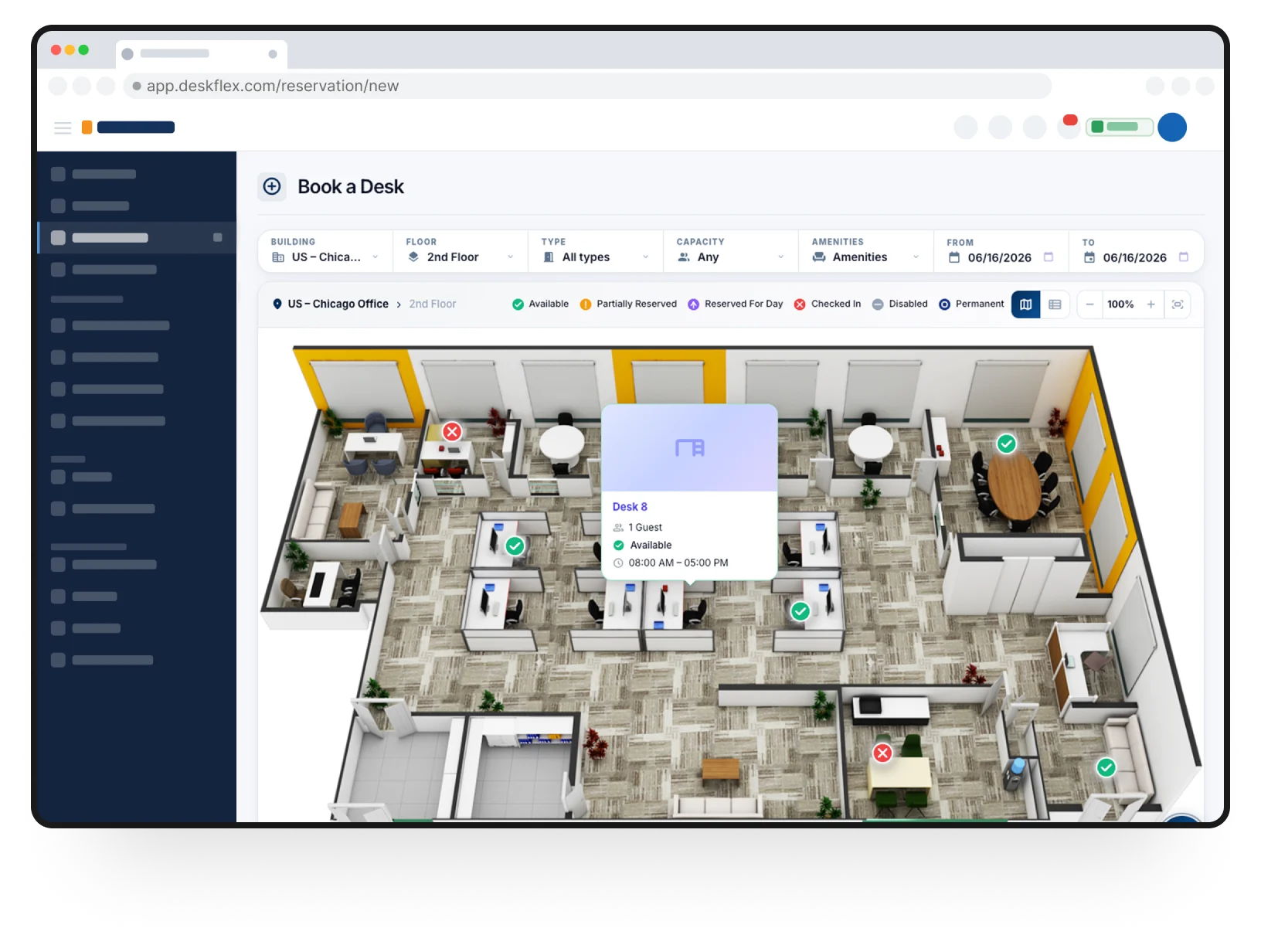
DeskFlex tracks desk reservations, usage patterns, and occupancy rates to provide a clear picture of workspace utilization. Organizations can identify underused desks, optimize seating arrangements, and ensure employees always have access to the resources they need.

Meeting Room Performance Insights

With DeskFlex, meeting room bookings are analyzed alongside actual usage, helping organizations reduce no-shows, eliminate ghost bookings, and better allocate room resources. Teams gain confidence that available spaces are used efficiently.

Workspace Optimization Across Locations

DeskFlex performance analytics goes beyond individual desks and rooms by providing a holistic view of workspace performance across floors and locations. This allows facilities managers to make informed decisions about space redesign, consolidation, or expansion based on actual usage patterns.

Real-Time Data for Smarter Decisions

DeskFlex collects and visualizes data in real time through intuitive dashboards and reports. Leaders can quickly identify trends, track performance, and make decisions that improve operational efficiency and employee satisfaction.

Benefits for Organizations

By combining workplace performance analytics with DeskFlex, organizations gain:

  • Clear insights into desk, room, and workspace utilization
  • Reduced operational costs and improved resource allocation
  • Enhanced employee experience with reliable access to spaces
  • Data-driven decision making for strategic planning

Optimize your office with real-time performance insights — Schedule your free DeskFlex demo now!

Conclusion

Performance analytics offers organizations a powerful framework to understand operations, uncover inefficiencies, and drive meaningful improvements. By turning raw data into actionable insights, businesses can make smarter, evidence-based decisions that enhance productivity and resource utilization.

Adopting performance analytics enables organizations to improve efficiency, reduce costs, and gain a clearer view of how workspaces, teams, and processes perform. This data-driven approach not only supports day-to-day operational decisions but also strengthens long-term strategic planning and organizational growth.

Frequently Asked Questions (FAQs)

Performance analytics is the structured evaluation of data to understand how processes, teams, and resources are performing.

It helps organizations make data-driven decisions, improve efficiency, optimize operations, and gain a clearer understanding of performance trends.

The main types include descriptive analytics (past performance), diagnostic analytics (why it happened), predictive analytics (future forecasts), and prescriptive analytics (recommended actions).

Almost every industry benefits, including business operations, marketing, finance, HR, IT, healthcare, and customer service sectors.

By providing actionable insights and identifying trends, it enables leaders to make informed, evidence-based decisions rather than relying on assumptions.